
The History of Yahweh – Storm God to Israelite Deity
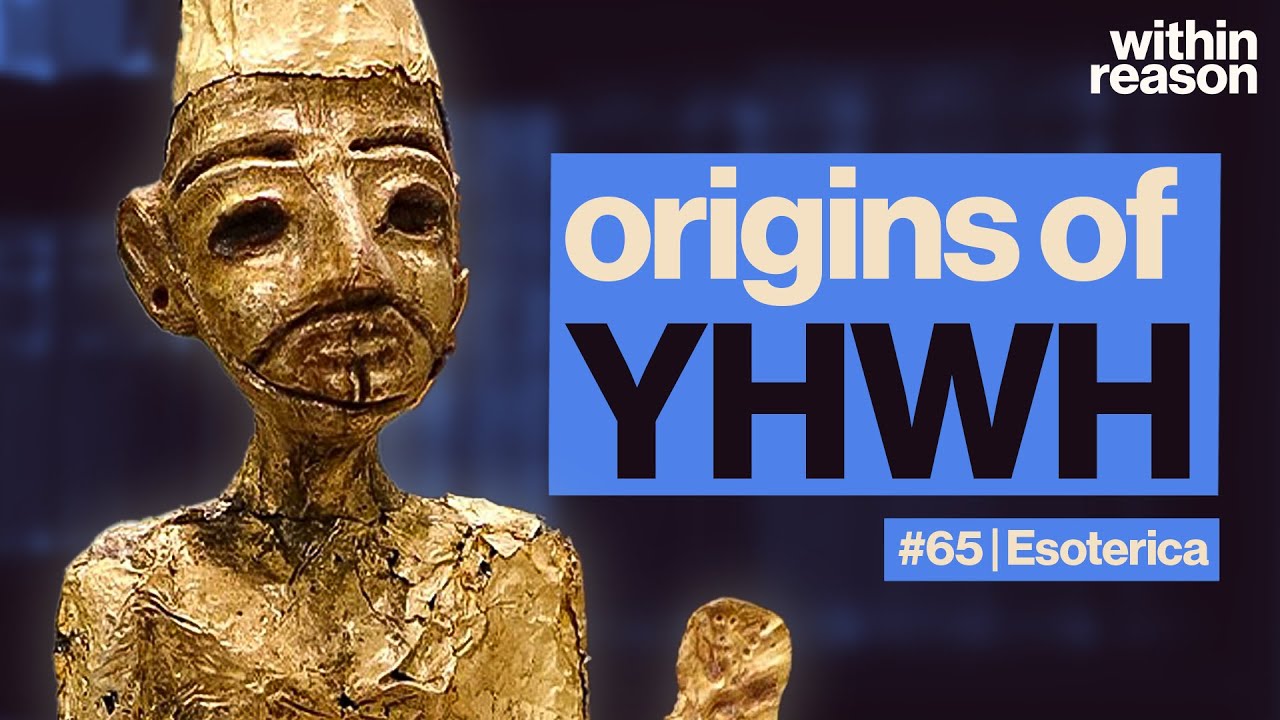
This episode contains a paid partnership with BetterHelp. Get 10% off your first month: https://www.betterhelp.com/alexoconnor
For early, ad-free access to videos, support the channel at https://www.patreon.com/alexoc
To donate to my PayPal (thank you): http://www.paypal.me/cosmicskeptic
– VIDEO NOTES
Justin Sledge is currently a part-time professor of philosophy and religion at several institutions in the Metro-Detroit area and a popular local educator.
His YouTube channel is “Esoterica”: @TheEsotericaChannel
– LINKS
Buy “The Early History of God” by Mark Smith: https://amzn.to/44ezTes
Buy “The Origins of Biblical Monotheism” by Mark Smith: https://amzn.to/3JyyZ32
– TIMESTAMPS
00:00 Pronunciation of YHWH
02:33 The Origin of YHWH
07:01 Oldest References to This God
18:00 How Translation Influences the Bible
20:00 Evolution of YHWH’s Influence
27:55 Assimilation of the Gods
30:59 From Many Gods to One God
37:09 Link Between Religion & Intoxication
40:19 How Different Regions Worshipped YHWH
51:48 What is Jewish Apocalypticism?
54:47 The Introduction of Jesus
1:01:50 How Jesus Became Identified With YHWH
1:09:03 Paul’s Mystical Visions of God
1:12:41 Is This Theology Gnostic?
1:18:52 Christians Believing Jesus is YHWH
1:23:17 What is the Demiurge?
1:35:43 A More Attractive Christian Narrative
1:40:28 Recommended Books
– SPECIAL THANKS
A special thanks to my top-tier supporters on Patreon:
Tom Rindell
James Younger, DDS
– CONNECT
My Website/Blog: http://www.cosmicskeptic.com
SOCIAL LINKS:
Twitter: http://www.twitter.com/cosmicskeptic
Facebook: http://www.facebook.com/cosmicskeptic
Instagram: http://www.instagram.com/cosmicskeptic
TikTok: @CosmicSkeptic
The Within Reason Podcast: https://podcasts.apple.com/gb/podcast/within-reason/id1458675168
– CONTACT
Business email: contact@alexoconnor.com
——————————————


@TheEsotericaChannel
March 31, 2026 at 7:04 pm
Thanks for having me on Alex – it was an honor and a wonderful conversation!
@luckytown7209
March 31, 2026 at 7:04 pm
1:30:15
@Christopher-Chang
March 31, 2026 at 7:04 pm
such an educational video! Thx Alex.
@surgeneral108
March 31, 2026 at 7:04 pm
Too much recited conjecture and not enough scholarship.
@DanteMuhammad
March 31, 2026 at 7:04 pm
Dr. Sledge’s breakdown is spot on, but it highlights a major blind spot in how we usually read these texts: a lot of ancient religious narrative makes more sense as territorial memory than as abstract belief.
Yahweh’s shift from a southern storm-deity to a centralized national God isn’t just theological. It’s geopolitical. In the arid Ancient Near East, a “storm god” means water and survival, while a “warrior god” means jurisdiction, borders, and corridor control.
Read through water systems, land grants, and border politics, the “faith” of the patriarchs starts to look a lot like practical territorial survival.
@jayjohnson007
March 31, 2026 at 7:04 pm
Cool story bro…please can u reference your information
@HowToPushBack
March 31, 2026 at 7:04 pm
Big fan of Alex but, he’s saying ‘Pool’ I’m sorry lol
@HermieLadeza
March 31, 2026 at 7:04 pm
Who was the Father of Yahweh what his relation of El, Baal and Ashe
@pertambi
March 31, 2026 at 7:04 pm
While the specific Hebrew name YHWH (Yahweh) does not appear in the Qur'an or in Arabic, its core meaning—"The Self-Existent Living God"—is a central concept in Islam. The Qur'an and Islamic tradition present the divine reality through the name "Allah" and, more specifically, through the attribute "Al-Hayy" (The Ever-Living), which is understood as the precise theological and linguistic cognate of YHWH.
Here is a summary of the key comparisons:
Aspect Judaism/Christianity Islam (Qur'an & Arabic)
Primary Name YHWH (Yahweh) / "I AM" Allah (الله)
Meaning of Primary Name "He Who Is," "The Self-Existent One" A contraction of al-Ilah, meaning "The God" (The One and Only Deity)
Core Meaning/Cognate YHWH, derived from the Hebrew verb hayah ("to be"), signifies eternal, self-sustaining existence. Al-Hayy (The Ever-Living) is the direct cognate. It is one of the 99 Beautiful Names of Allah and signifies the source of all life who is self-subsistent.
Direct Connection Exodus 3:14: "I AM THAT I AM" (Ehyeh asher ehyeh). Islamic scholars identify Ehyeh asher ehyeh with "Ya Hayyu Ya Qayyum" (O Ever-Living, O Self-Subsisting), considered the "Greatest Name" of God.
The Linguistic and Theological Connection: "Al-Hayy" (The Ever-Living)
The most significant parallel between the meaning of YHWH and Islamic theology is found in the divine attribute Al-Hayy (ٱلْحَىُّ).
· A Cognate Meaning: The etymological root of YHWH is the Hebrew verb hayah, meaning "to be" or "to exist," pointing to God as the source of all existence. The Islamic concept of Al-Hayy carries the same essential meaning—the One who is eternally and perfectly living, the source of all life, who was not born and does not die.
· The "Greatest Name" (Ism al-A'zam): In Islamic tradition, there is a concept of the "Greatest Name" of God, a special supplication that guarantees a response. The Prophet Muhammad is reported to have identified this name as the phrase "Ya Hayyu Ya Qayyum" (يَا حَىُّ يَا قَيُّومُ)—"O Ever-Living, O Self-Subsisting".
· Connection to Moses: Classical Islamic scholars, such as Al-Qurtubi in his famous Qur'anic commentary, explicitly connected this to the revelation given to Prophet Moses. They narrate that when the Children of Israel asked Moses about God's "Greatest Name," he responded with a phrase that, when interpreted, meant "Ya Hayyu Ya Qayyum"—the equivalent of "I AM THAT I AM" (Ehyeh asher ehyeh) in their tongue.
How the Concept Appears in the Qur'an
The meaning of YHWH is reflected in the Qur'an through the frequent use of the name "Allah" and the attribute "Al-Hayy," emphasizing God's absolute, self-sustaining existence.
"Allah! There is no god ˹worthy of worship˺ except Him, the Ever-Living (Al-Hayy), All-Sustaining (Al-Qayyum)."
— Qur'an 2:255 (Ayat al-Kursi)
This verse, known as the "Throne Verse," is considered the greatest verse in the Qur'an and encapsulates the essence of God's nature as the eternally living source of all existence, mirroring the theological core of YHWH.
The Qur'an also uses the verb yuhyee (يُحْيِى), meaning "He gives life," as a key action of God, further reinforcing this concept:
"There is no deity except Him; He gives life and causes death."
— Qur'an 44:8
The Supreme Name: "Allah"
While Al-Hayy conveys the specific meaning of YHWH, the primary personal name for God in Islam is Allah.
· Meaning and Etymology: The word "Allah" is a contraction of al-Ilah, meaning "The God." It is the unique name for the Supreme Being in Arabic and has been used by Arab Jews, Christians, and Muslims for centuries.
· A Name of Oneness: Unlike the English word "God," which can be made plural ("gods") or gendered ("goddess"), the word "Allah" is unique in Arabic, having no plural and no feminine form, which perfectly aligns with the Islamic concept of absolute monotheism (tawhid).
· The Universal God: The Qur'an emphasizes that Allah is the same God worshiped by Jews and Christians. Verse 29:46 states, "Our God and your God is One".
In summary, while the Tetragrammaton YHWH is not mentioned in Islamic scripture, its profound meaning is not only acknowledged but is a central pillar of Islamic theology. The concept is expressed through the name Allah, and its specific essence is captured in the divine attribute Al-Hayy (The Ever-Living) , which Islamic tradition directly connects to the divine name revealed to Prophet Moses.
@spencervaughn3946
March 31, 2026 at 7:04 pm
Also….this Guys bias starts creeping in at about the hour mark.
@spencervaughn3946
March 31, 2026 at 7:04 pm
I’m surprised the influence that Zoroastrianism durning the Babylonian exile was not brought up. That had a huge impact when moving into a monotheistic Jewish faith.
@HeavenlyJWM69
March 31, 2026 at 7:04 pm
So if you can say in 10 minutes what you know about this God why make a almost 2 hr long video 🙄
@joshuahoover7944
March 31, 2026 at 7:04 pm
It's believed to be related to Breath
@ronacosta1151
March 31, 2026 at 7:04 pm
Thanks for proving that all 3 monotheistic religions are nonsense!
@OliveHello
March 31, 2026 at 7:04 pm
Are yoj saying pool?
@Mbw-r2o
March 31, 2026 at 7:04 pm
The "name" is far more than 2000 years old, basically, he doesn't know, Jahova is not even in our text, the J is a later creature in literacy.
@jshadnot
March 31, 2026 at 7:04 pm
There’s gotta be some apologetic way to get out of all this lol
@trikitrikitriki
March 31, 2026 at 7:04 pm
You should remove the better help ad.
@Ivan-v6k1h
March 31, 2026 at 7:04 pm
Better help is 💩
@MisterKaen
March 31, 2026 at 7:04 pm
YHWH itself and letters as astrological symbolsThe divine name YHWH (Yod–He–Vav–He) is often broken down letter by letter in Kabbalah, each with elemental and cosmic meanings:Yod (י) – seed, point of fire, the initial spark or will.First He (ה) – expansion, breath, the world of understanding or form.Vav (ו) – line/connector, channel that brings the upper energies down, sometimes linked to the six directions / six emotional sefirot.Second He (ה) – manifestation, the world of action and physical reality.
@MisterKaen
March 31, 2026 at 7:04 pm
It's the house of taurus.
Easy as that.
@thatssoironic
March 31, 2026 at 7:04 pm
Indiana Jones bro.
We say it that way, because Dr. Jones taught us how. 😊😊
@tutucox
March 31, 2026 at 7:04 pm
whoaaaa man, that was a trip
@jasonbrown1807
March 31, 2026 at 7:04 pm
What an amazing (re) telling of the Yahweh / Jesus movements!
@strangerspraise
March 31, 2026 at 7:04 pm
It is interesting that the "more ancient" texts are all poetic texts. Is it possible that there were certain linguistic characteristics of poetry that weren't used in other writing styles and that is why there seems to be "older" and "newer" ideas of Yah? We do the same thing in English poetry.
@majorlifts
March 31, 2026 at 7:04 pm
Are you saying YHWH is not the God of the Israelites? Not the God that walked Moses and Aaron through the desert? Then who is God? Who wrote the ten commandments?
@raygoodspeed2382
March 31, 2026 at 7:04 pm
Marvellous. 1hr 44min well spent, with coffee and chocolate.
@HitlorHitlorgunggut
March 31, 2026 at 7:04 pm
Can Muslim Allah enter his ceration pls answer YES. NO
@luckytown7209
March 31, 2026 at 7:04 pm
8:21
@darkdogzstudioz
March 31, 2026 at 7:04 pm
i find it hilarious how you pronounce paul as pool. XD
@ConnieM.
March 31, 2026 at 7:04 pm
I can't begin to explain my thankfulness for this content! For a very long while now, I have been looking up the Hebrew and Greek meanings to all the words, names, places, animals, birds, etc. in the Bible and have been shocked at what all I've found. When the Bible is read at surface level only, so very much is missed. The above video confirms everything I have discovered. This is an extremely lonely road to walk because no one would ever believe me if I tried to tell them about all of this. I would be called an apostate, would be shunned, and who knows what all else. I thank you for taking the time to post this important information!! Surely do wish that everyone knew about this!!!
@melkajohsnon-mu5te
March 31, 2026 at 7:04 pm
Alex you look heavenly you’re eyes ❤certain people do…
@pauladuncanadams1750
March 31, 2026 at 7:04 pm
Yahweh. He is. Al-lah. The god. Seems logical to me.
@Hunter-915
March 31, 2026 at 7:04 pm
Aizen is better than Yhwach
@suheilpinto6964
March 31, 2026 at 7:04 pm
I'm from India. People may not know this, hindu priests smoke marijuana and drink opium. What this guy is explaining is basically hinduism. Hinduism is a living fossil of ancient israelite religions.
@suheilpinto6964
March 31, 2026 at 7:04 pm
All religions start of as cults.
@suheilpinto6964
March 31, 2026 at 7:04 pm
You need to be a special kind of idiot to know history and still believe in a god.
Comments are closed.