
The Dao of Letting Go (or Not Trying) | Big Think
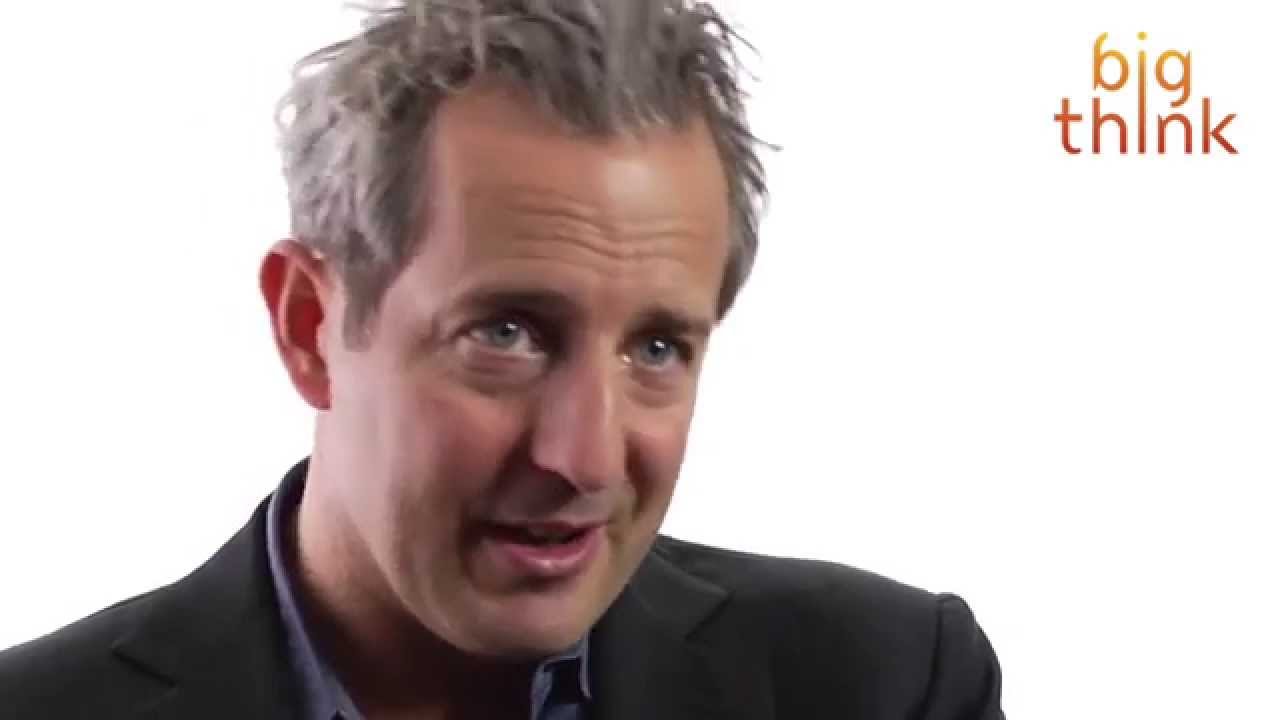
The Dao of Letting Go (or Not Trying)
Watch the newest video from Big Think: https://bigth.ink/NewVideo
Join Big Think Edge for exclusive videos: https://bigth.ink/Edge
———————————————————————————-
Dr. Edward Slingerland on “wu wei,” the Confucians and the Daoists’ key to political and spiritual success.
———————————————————————————-
Edward Slingerland:
Edward Slingerland is Professor of Asian Studies and Canada Research Chair in Chinese Thought and Embodied Cognition at the University of British Columbia. Educated at Princeton, Stanford and the University of California, Berkeley, he is an internationally renowned expert in Chinese thought, comparative religion, and cognitive science. In addition to over twenty academic journal articles in a range of fields, he has written several scholarly books, including What Science Offers the Humanities and a translation of the Analects of Confucius. He is the author of Trying Not to Try: The Art and Science of Spontaneity.
———————————————————————————-
TRANSCRIPT:
Edward Slingerland: Wu wei is an early Chinese term that means literally no doing or no trying. But I think a better translation is effortless action. And it’s the central spiritual ideal for these early thinkers I look at. So the Confucians and the Daoists. And what it looks a little bit like flow or being in the zone as an athlete. So you’re very effective. You’re moving through the world in a very efficient way – social world and physical world. But you don’t have a sense of doing anything. You don’t have a sense of effort. You don’t have a sense of yourself as an agent. You kind of lose yourself in the activity you’re involved in.
And you’re not only efficacious in terms of skill in the world. You also have this power that the early Chinese call – unfortunately the Mandarin pronunciation is duh which sounds kind of funny. But it’s often translated as virtue. It means like charismatic power. Charismatic virtue. It’s this energy you kick off, an aura that you kick off when you’re in a state of wu wei. And this is why these early thinkers want wu wei because for both of them, the Confucians and the Daoists it’s the key to political and spiritual success. So if you’re a Confucian getting into a state of wu-wei gives you this power duh. And this allows you to attract followers without having to force them or try to get them to follow you. People just spontaneously want to follow you.
If you’re a Daoist it’s what relaxes people, puts them at ease and allows you to move through the social world effectively without harm. So everybody wants this because it’s a very – it’s the key to success. But they’re all involved in this tension then of how do you try to be effortless. How do you try not to try.
So the first strategy is the early Confucian strategy which I refer to as carving and polishing strategy which is essentially you’re gonna try really hard for a long time. And if you do that eventually the trying will fall away and you’ll be spontaneous in the right way. So you practice ritual, you engage in learning with fellow students and eventually somehow at some point you make the transition from trying to having internalized these things you’re learning and being able to embody them in an effortless way. The second strategy, the uncarved block or going back to nature strategy is the Daodejing or the primitivists Daoists. And they essentially think the Confucian strategy is doomed. If you are trying to be virtuous, if you’re trying to be a Confucian gentleman, you’re never gonna be a Confucian gentleman. Anyone trying to be benevolent is never gonna actually be benevolent. They’re just gonna be this hypocrite.
So their strategy is undo all this learning that you’ve been taught. So get rid of culture, get rid of learning, actually physically drop out of society. So they want you to go live in the countryside in a small village. It looks a lot like kind of 1960s hippie movement, you know. Back to nature and get rid of technology. Get rid of all of the bad things that society has done to us. There’s good points to this strategy, too. One of the main insights I think of the Daoists, these early Daoists is a way in which social values, social learning can corrupt our natural preferences. So we’re, you know, body images in advertising teach women that they have to be anorexic if they’re attractive. We’re taught that we always need to have the latest iPhone. So, you know, we have a perfectly good iPhone but then we see the new iPhone and suddenly our old iPhone isn’t good anymore.
Read the full transcript at https://bigthink.com/people/edward-slingerland/


@unpolishedpearl3769
January 15, 2026 at 8:43 pm
Wow I’m a little shocked how he mixes Confucianism and Taoism and talks about the Confucianist path of polishing the wooden block as one Taoist method…
Also talking about the original Taoists as remedying withdrawal from society and living isolated lives…. but referring to hippie communes as an example? Those were also a type of society…
I dunno, I think what we’re experiencing here is a very generalized Confucianist Perspective on Taoism ^^ I hope you research the topic further and don’t let these words be your one-stop-ship ^^
– a Taoist
@currypablo
January 15, 2026 at 8:43 pm
They call it BEING AMISH!
@PaulValickas
January 15, 2026 at 8:43 pm
Daa…
@Taldaran
January 15, 2026 at 8:43 pm
Get yourself a copy of "The wisdom of Laotse" by Lin Yutang. It contains the "Book of Tao," each chapter of which is followed by a comparable passage from Chuangtse's writings; supplemented by "Prolegomena" and "Imaginary conversations between Laotse and Confucius" by Chuangtse. The translation is well thought out and logical to us westerners, so it makes for good reading and understanding of the Tao with a minimum of head scratching.
@ousmandiallox
January 15, 2026 at 8:43 pm
Beautiful summary of these ancient philosophies and ways of being
@ScarlettTantrika
January 15, 2026 at 8:43 pm
Yaaas 🙌🏽 the path of everything and the path of the void. Great explanation 💛✨
@Chipop267
January 15, 2026 at 8:43 pm
Letting go of the teacher, putting being and action in the world. Trust.
@thepoliticsofhumanity3419
January 15, 2026 at 8:43 pm
Yes I found this practice is based on understanding, not knowledge
@merlenevs
January 15, 2026 at 8:43 pm
德 is not pronounced as "duh", but as dé
@Gk2003m
January 15, 2026 at 8:43 pm
“hedonistic treadmill….” hedonism and Taoism are not necessarily different from each other. Materialism is not a necessary component of hedonism. In fact, it is far easier to be ecstatic in this moment if one’s happiness is not tied to acquisitions, to things. In the best hedonism, there are in fact no things. There is only joy, and joyous people unencumbered by things enjoying that joy together.
@theoak64
January 15, 2026 at 8:43 pm
Like the great golfer Ty Webb said be the ball Danny be the ball
@buffybuffalo2975
January 15, 2026 at 8:43 pm
Dang. I’ve actually been performing an ancient art form for the longest time without being aware
@bcvc111
January 15, 2026 at 8:43 pm
Lao Tzu told me “wisdom is important”
@xieyuheng
January 15, 2026 at 8:43 pm
#YangGang #Yang2020
@burtonrivera5253
January 15, 2026 at 8:43 pm
Some have it
Some don t…..
The capacity
precedes birth
( transmigration of
the soul )
Marketing, re-naming, restructuring "old"
Which is actually refinement of " then"
It's in my d.n.a.
( no choice in that,
Yet it is every "choice")
@Riffeeee
January 15, 2026 at 8:43 pm
Thanks for the great content!
One interesting thought, is Transcendental Meditation counter productive for achieving flow state since it increases the activity in the default mode network brain region?
Love to hear your insight on this!
All the best!
@stndsure7275
January 15, 2026 at 8:43 pm
Doing-not-doing requires a lifetime of training – under a fully qualified teacher
@dennisr.levesque2320
January 15, 2026 at 8:43 pm
I think you mean "Tao". A lot of people pronounce it with a D, but it's spelled with a T. Anything gets better with practice (including spelling/language). Just don't give up before it's second-nature. Otherwise, pay attention, or just hope for the best.
@Steve197201
January 15, 2026 at 8:43 pm
My strategy is to take an "Ah, eff it!" approach. I think westerners are so preoccupied with success and having a "never give up" attitude that it doesn't allow us to let go. It's practically a sin in our culture to just give up, but that, often times, is what's necessary to reach our goals because we actually have very little control over our circumstances.
@Nixably
January 15, 2026 at 8:43 pm
so true, thank you for this. I think it's going to help me.
@mohicanmowl
January 15, 2026 at 8:43 pm
Go to nature and be simple…I will never get why these corrupted minds would understate something like that while doing the total exact opposite…jeez
@barrylongden7
January 15, 2026 at 8:43 pm
But "God" loves a trier right?!!
@barrylongden7
January 15, 2026 at 8:43 pm
Sometimes you need to try hard to do something for many years and then the moment you realise it will never work and you quit is when you succeed.
@willfrank961
January 15, 2026 at 8:43 pm
"Wu Wei" like… Huawei??
@Nitephall
January 15, 2026 at 8:43 pm
I experienced this "effortless action" in a lucid dream once. I wanted to move from where I was to a place where there were some people about 20 feet away. Suddenly I was just moving, through no effort of my own, across the floor. This "force" moving me was incredibly powerful, and there was a sense of awareness in it, but the most fascinating thing was that it wasn't making me do anything I didn't want to do. It's like how Obi Wan Kenobi describes the Force in Star Wars: "It guides your actions, but it also obeys your commands." It was exaclty like that. But the sense of power operating in it was incredible. It's like anytime we have to expend any kind of effort to do anything, we're already out of alignment with this vast cosmic force. Trying and doing has nothing to do with it.
@kratosofspartareal
January 15, 2026 at 8:43 pm
Daaaaaooooooooowwwwwwwwwaaaaaaaa
@nimi8538
January 15, 2026 at 8:43 pm
I thought it was Adhd N non cognitivism on 'sad'…
@Kayvon12321
January 15, 2026 at 8:43 pm
I wish my friend Elsa watched this before she started going all cray cray.
@truelovesstudent
January 15, 2026 at 8:43 pm
His voice
@MrSonny208
January 15, 2026 at 8:43 pm
If you're watching this kind of videos, whether it makes a big difference on you or not, give yourself a congratulations, your seeking and being curious, using this the tools you have, like internet.
@johannesmagnusbagnus3146
January 15, 2026 at 8:43 pm
is the transcibt for the speak wot the wannabe "scientist say"
@Shaunt1
January 15, 2026 at 8:43 pm
Reminds me of materialism vs. non-materialism.
@rylau94
January 15, 2026 at 8:43 pm
Any students at UBC should definitely take ASIA 371 – Foundations of Chinese Thought with Dr. Slingerland. Amazing course, amazing prof.
@RitsychServare
January 15, 2026 at 8:43 pm
But Yoda said that either "do or do not. There is no try."
@AndyBaedal
January 15, 2026 at 8:43 pm
It is spelled as tao, not though.
@sin8800
January 15, 2026 at 8:43 pm
The more you try to control something, the more out of control it becomes ^_^
Comments are closed.