
Native Bidaské: Exposing the History of Forced Sterilization Part 2
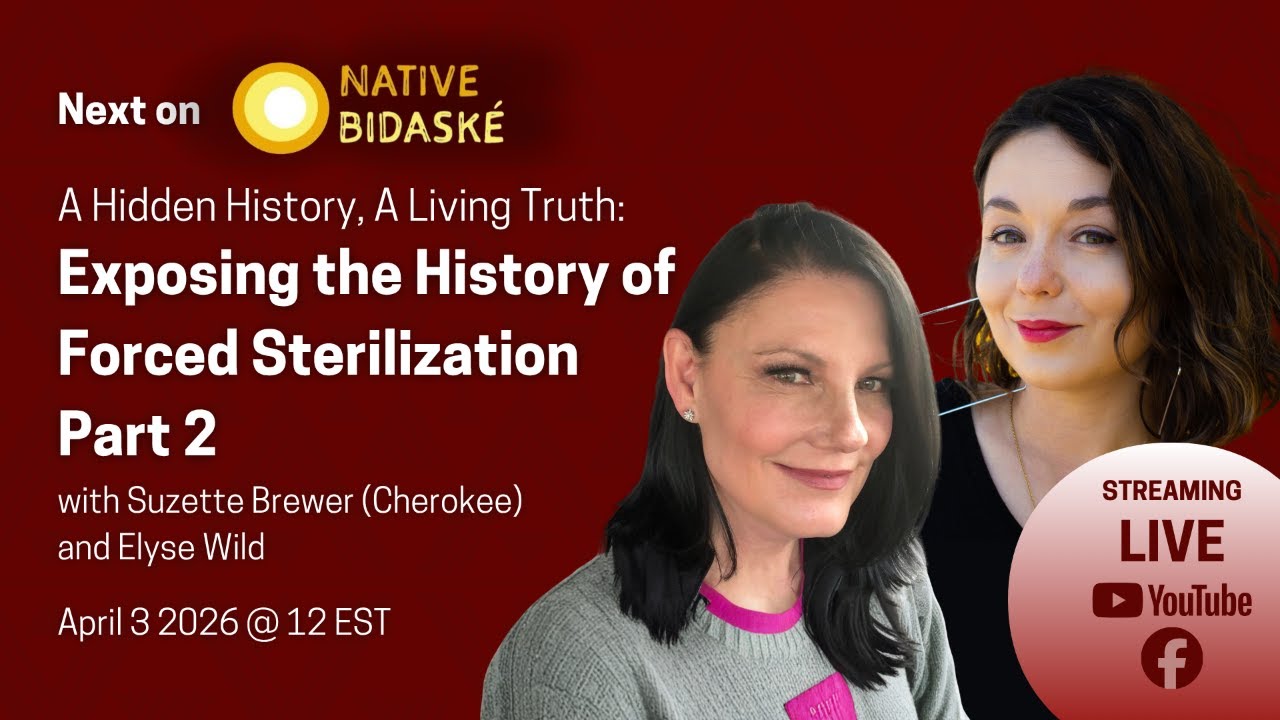
What if one of the most shocking injustices in American history never actually ended?
Join Native Bidaské for Part 2 of our powerful series on the forced sterilization of Native American women—an issue that continues to impact Native communities today.
In this episode, host Levi Rickert is joined by journalists Suzette Brewer and Elyse Wild to uncover how government policies and medical systems stripped Native women, men, and even children of their reproductive rights—often without their knowledge or consent.
Through firsthand accounts and investigative reporting, this conversation reveals:
– Survivors’ stories that expose the lasting emotional and physical harm
– The legal history behind forced sterilization, including the 1927 Buck v. Bell decision
– How these injustices are still connected to modern-day abuses in prisons and detention centers
– Why this crisis continues to shape maternal health and medical trust in Indian Country
This is not just history—it’s a human rights issue still unfolding today.
Don’t miss this critical conversation that calls for truth, accountability, and lasting change.
📅 Airing April 1 at 12 PM ET
📍 Watch on Facebook, YouTube, and NativeNewsOnline.net
🔔 Subscribe and follow to stay informed on stories impacting Indian Country.
#NativeNews #IndianCountry #NativeBidaske #IndigenousStories #HealthEquity #HiddenHistory
Support Warrior Journalism by donating to Native News Online: https://www.paypal.com/donate?campaign_id=PQSUAS6ALKRC2
Get our newsletter: https://nativenewsonline.net/subscribe-to-native-news-today


@CorndancerHawkeyes91254
June 10, 2026 at 10:29 pm
Very interesting topic and I hope it turns into a well recorded document, and true stories movie.
Native American (Indigenous) women
During the 1960s and 1970s, many Native American women were sterilized without proper consent, often through the Indian Health Service.
Investigations in the 1970s found that:
Thousands of Indigenous women were sterilized
Consent forms were misleading, rushed, or not fully explained
Some women were threatened with loss of medical care or benefits
In some cases, minors were sterilized
A major investigation by the Government Accountability Office in 1976 confirmed widespread abuses in multiple states.
These actions weren’t isolated mistakes—they reflected systemic racism and control over marginalized communities’ bodies. The impact is lasting: Loss of future generations Trauma within families and communities
Deep mistrust of medical systems. Because of these histories, there are now stricter informed consent laws and protections in healthcare. However, advocacy groups still raise concerns about:
Coercion in prisons or detention centers
Language barriers affecting consent
Ongoing inequities in reproductive healthcare
These histories were hidden or minimized for a long time, and bringing awareness is part of ensuring it doesn’t happen again.
Many scholars and advocates connect these practices to the broader history of eugenics in the United States—where policies sought to control the reproduction of marginalized groups, including Indigenous, Black, Latina, and disabled women.
Bringing attention to this history is not just about the past—it’s about accountability, healing, and ensuring that medical ethics are truly respected for everyone today.
A'ho! 🌽
Corndancer
@lhuenemann8149
June 10, 2026 at 10:29 pm
My wife was not "forced" to be sterilized, but was asked when already in the delivery room – on the delivery table – if she wanted her tubes tied. No time to think it over, no time to consult with me. Fortunately she said no. Not "forced" but same unethical practice. This was 1973.
Comments are closed.