
It’s a Small, Small World: PTSD as Self-Imprisonment. | Big Think.
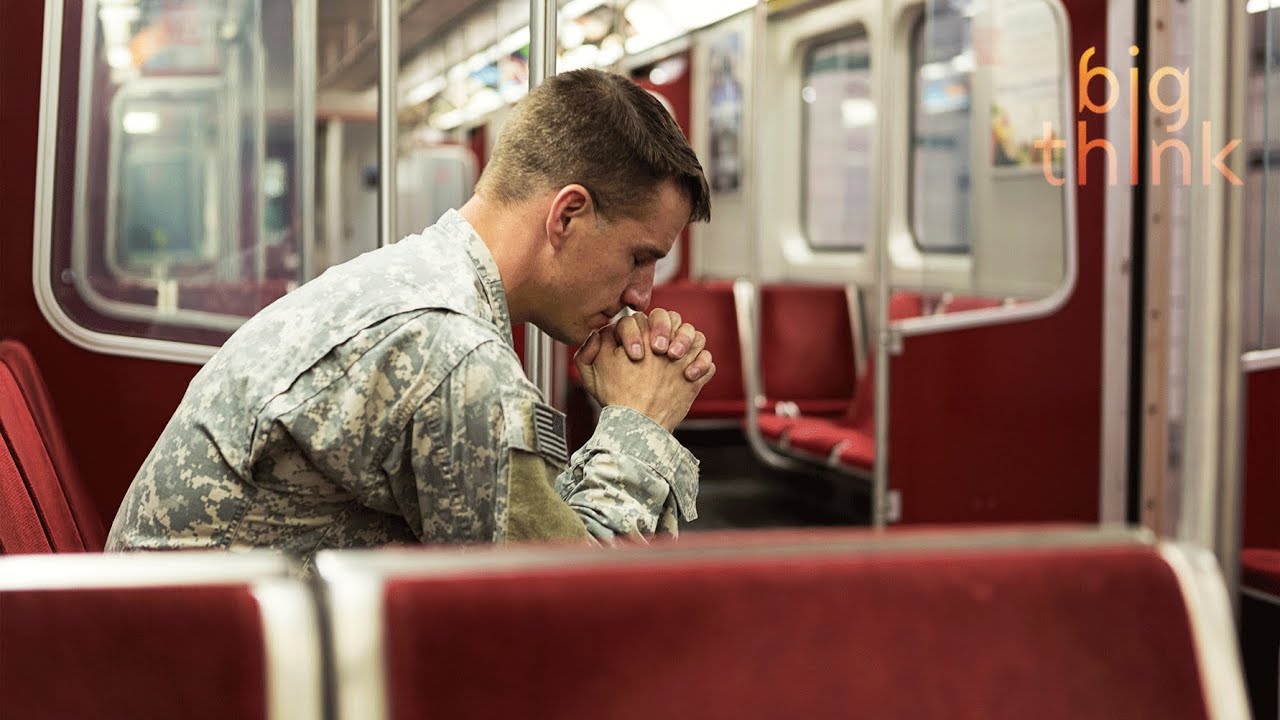
It’s a Small, Small World: PTSD as Self-Imprisonment.
Watch the newest video from Big Think: https://bigth.ink/NewVideo
Join Big Think Edge for exclusive videos: https://bigth.ink/Edge
———————————————————————————-
Big Think and the Mental Health Channel are proud to launch Big Thinkers on Mental Health, a new series dedicated to open discussion of anxiety, depression, and the many other psychological disorders that affect millions worldwide.
Dr. Rachel Yehuda is one of the foremost researchers in the country studying neurobiology with regard to PTSD. In this video interview, Dr. Yehuda relays common symptoms and struggles associated with the debilitating disorder. Where does one’s brain go when traumatic flashbacks emerge? How do you fight these uncomfortable situations? Dr. Yehuda delves into these and other questions.
———————————————————————————-
RACHEL YEHUDA:
Rachel Yehuda, PhD, Professor of Psychiatry and Neuroscience, is the Director of the Traumatic Stress Studies Division at Icahn School of Medicine, and the Mental Health Patient Care Center Director at the James J. Peters Veterans Affairs Medical Center.
Dr. Yehuda has authored more than 300 published papers, chapters, and books in the field of traumatic stress and the neurobiology of PTSD. Her current interests include the study of novel treatments for PTSD, the examination of risk and resilience factors, the study of psychological and biological predictors of treatment response in PTSD, genetic, epigenetic, and molecular biological studies of PTSD and the intergenerational transmission of trauma and PTSD. Her team’s research on cortisol and brain function has revolutionized our understanding and treatment of PTSD worldwide.
Dr. Yehuda has received many awards in recognition of her work including the Curt Richter Prize in Psychoneuroendocrinology, and the Laufer award from the International Society for Traumatic Stress. She was also awarded the Max Planck Institute for Psychiatry (Munich, Germany) 2004 Guest Professorship in Psychiatry and Neuroscience, and the Marcus Tausk Professorship in Leiden University to honor her accomplishments in the endocrinology of PTSD.
Dr. Yehuda received her PhD in Psychology and Neurochemistry and her MS in Biological Psychology from the University of Massachusetts at Amherst and completed her postdoctoral training in Biological Psychiatry in the Psychiatry Department at Yale Medical School.
She has an active federally funded clinical and research program that welcomes students and clinicians.
———————————————————————————-
TRANSCRIPT:
Rachel Yehuda: War changes people and this is something that we’ve known since recorded history. It’s spoken about in literature throughout the ages. It’s kind of a brotherhood of combat veterans and for many, many years it stayed in the brotherhood. And a lot of people came back from World War II, our fathers, our grandfathers, didn’t talk about what happened because nobody would understand. But the thing is that you’re transformed inside. You feel different. You’ve seen things; you’ve seen death; you’ve experienced, you’ve tasted fear; you’ve done things that you don’t want to talk about or feel should be talked about because it would be too scary for people to understand.
PTSD is one of the most common mental health conditions in the United States and I think it’s – it might be the fourth most common condition. And that’s because trauma is so prevalent in our society. About 25 percent of women experience interpersonal sexual violence, which is extraordinary. There are accidents and natural disasters. More than half of persons will be exposed to at least one traumatic event in their lives. The way that I like to describe a traumatic event is an event that kind of divides your life into a before and after, a watershed moment that really kind of changes the way you view the world. Whether or not you get post-traumatic stress disorder, it’s big. You’re leading your life a certain way, something very big happens and it changes the way that you look at yourself and you look at the world. So those kind of events are certainly transformative. They certainly have long-lasting marks and one of those effects of trauma exposure can be the development of post-traumatic stress disorder. Imagine if you see danger everywhere and that you’re really worried for your safety. That is going to affect almost every interaction that you have. At work, you’re going to be more on edge, more irritable. It could get you into fights with coworkers or with your employer.
The idea that you can’t really experience pleasure or that you have restricted range of emotions is going to affect you mostly in social and in interpersonal domains……
To read the transcript, please go to. https://bigthink.com/videos/rachel-yehuda-on-ptsd


@davidfrazier7662
December 25, 2025 at 11:16 pm
I'm a US marine combat vet I was a pow I was brutally tortured almost killed on several different occasions I have been diagnosed with chronic ptsd
@user-iz8gh1bm3u
December 25, 2025 at 11:16 pm
My step father who was a draft dodger/conscientious objector, pretended to be my friend for a few years while he dated my mom, then after they married he abused me for 8 years from ages 9-16 before I ran away. I suffered from devastating treatment resistant PTSD/alcoholism for 30 years. I have been trying different nootropics desperately trying to survive. Recently I made a massive breakthrough using lion's mane mushrooms. It's like low dose MDMA – it just makes you feel good and I was able to push through 30 years of emotional blockages. Buddhist monks have been using it for aeons. Let that sink in. HTH YMMV. Thank god the law takes child abuse seriously now.
@joshualavonobeyer9183
December 25, 2025 at 11:16 pm
Is there a ptsd support group?
@mahaj1861
December 25, 2025 at 11:16 pm
Why would i sympathy with murderer instead of sympathing with the innocent people killed by them
@smartkite2420
December 25, 2025 at 11:16 pm
Try this Module and follow the instructions: https://youtu.be/UPQRaRcvuw0
@irishconstitution3240
December 25, 2025 at 11:16 pm
As I wrote in an older comment: There are seminal moments, defining moments in life. And when they occur life is defined by them – what life was before that moment, what life was after that moment.
This lady brilliantly describes an event that divides your life into a before and after. You ruminate about the traumatic event and blame yourself on how you might have prevented it, or have done things differently. It's pure torture trying to turn back the clock and wishing you could correct a past that's long gone – it's a futile endeavor! If only, if only – I'd have listened to people's advice, this life changing event would never have happened. I blame myself and I'm haunted everyday by this horrible situation, which has destroyed my life. Depression, anxiety, suicidal ideation and crippling OCD are a result of me bottling up this incident. The shame of it has kept me silent for thirty years. Trying to keep a lid on it has destroyed my heath, career and the ability to function in society.
I wish I could have opened up all those years ago and realized that repression of this traumatic event has cast me into a dark hole that's really difficult to escape from!
Anyway that's my story, I wish it wasn't. Don't make my mistake and hope that the problem and pain will just go away, it won't! Reach out to a mental health professional, a trusted friend or family member to help you bear the burden that you cannot carry alone.
@jimmymiller77
December 25, 2025 at 11:16 pm
There is no such thing as Mental Health The VA is NO HELP
@PrinceWesterburg
December 25, 2025 at 11:16 pm
To me sound has shape, form, colour. Its why I'm a musician, record and into hifi. For 12 years I had to put up with an unbelievably loud, ultra repetitive dog barking next door. It was like being raped every day, I lived in a mental breakdown for about 8 years and years later I was getting into fights at work. Then a friend who'd trained as a doctor said I had PTSD. That made the change. Knowing whats wrong helps.
I was lucky, I bumped into an old friend who ran a meditation group, I joined and I'm starting to be me again, its taken a few years but that mental clenched fist is slowly opening and trusting again.
@TrymYoutubeEldby
December 25, 2025 at 11:16 pm
thanks for this video
@bluesharp59
December 25, 2025 at 11:16 pm
Good video and i gave a Thumbs Up for you also.
@jackiesantangelo6610
December 25, 2025 at 11:16 pm
I learned all these traits before the age of ten – the neighborhood isn't safe, the house? even more dangerous. Being home from school because the teachers don't want you back until your parents find out about the tremor. It's 4th grade and they're watching me white knuckle grip a pencil to try and stop the shaking. Now you're in trouble for bringing a spot light on the family. They scream at you to stop it but now you look like you have full body vibration like a beaten, broken dog.
PTSD doesn't drive me or my choices any longer and it hasn't in quite some time. It's nasty symptoms didn't abate until I got drug free – 12 to 19 was drug oblivion driven PTSD. Then I chose sobriety over death. I've been living – not surviving, I'm living. Then I asked for help. I didn't do it alone and you are not alone. There is life after PTSD.
@GueVonez
December 25, 2025 at 11:16 pm
I almost got PTSD from just watching that movie Furry with Brad Pit, idk how anyone can come back from war and just do normal shit
@auto-tech-tronics-divtelam8468
December 25, 2025 at 11:16 pm
As an outside Govern-Mental observer I see the govern-MENTAL welfare prostitutes pay for following governmental orders that go against God – Basically they let go and let Gov instead tooooo longggg tooo lateeee honey
@yetanotherperson6436
December 25, 2025 at 11:16 pm
Some people who suffer from PTSD don't remember the event that caused it. It's not true that the memory of the event becoming haunting is the hallmark of the condition. I have had a complex form of PTSD for about thirteen years and I don't have haunting memories of a traumatic event. The problem with the presenter of this video saying things like this is that it will mislead people who are desperately searching to find out what condition they have. I was self diagnosed. My diagnosis was confirmed by a doctor, but I did the researched myself. This video would have confused the issue.
@EE33339
December 25, 2025 at 11:16 pm
Why is it always about war vets??? It isn't a war veterans disorder it is an ANXIETY DISORDER caused by repeated exposure to extreme traumatic events!!! More civilians have it than vets…more survivors of sexual violence and trauma have it than trauma survivors of any other type…THIS IS OLD NEWS!!!
@nh5903
December 25, 2025 at 11:16 pm
Thank you for the video….
@DisorderedUniverse
December 25, 2025 at 11:16 pm
She didn't mention complex ptsd which is a more severe form of ptsd. Should have mentioned it.
@Ashbuster85
December 25, 2025 at 11:16 pm
You don't have to be in military to have PTSD
@ohcamillesnow
December 25, 2025 at 11:16 pm
I literally hate people who associate PTSD with nothing else but war.
@phab2808
December 25, 2025 at 11:16 pm
So scanning the environment is a bad thing you might want to quantify that statement to avoid alienating quite a few people. People wonder why they dont talk hmm.
@captainobvious49
December 25, 2025 at 11:16 pm
MDMA
@Roedygr
December 25, 2025 at 11:16 pm
I think of PTSD as poetic justice. Most of the wars of the last decades have been illegal. People joined them not to protect their countries, but because they liked bullying and killing people. Serial killers who join the military can do the same things and get medals for it. I am happy to see them suffer.
@AlltimeConspiracies
December 25, 2025 at 11:16 pm
A very important conversation. Good job.
@hedleypanama
December 25, 2025 at 11:16 pm
#Objection!
I am triggered! does Twitter-induced PTSD… #Overruled!
@jkshorts4520
December 25, 2025 at 11:16 pm
MDMA assisted psychotherapy.
@a7i20ci7y
December 25, 2025 at 11:16 pm
I have friends that need help and I don't know how to help them.
@atomixfang
December 25, 2025 at 11:16 pm
Seeing the world as a bad place its not a symptom of PTSD, it is seeing it as it is, plain and simple.
@G3nius
December 25, 2025 at 11:16 pm
Neurofeedback – Alpha/Theta protocol for PTSD from peniston and kulkowski … known since ages!
@JuliusUnique
December 25, 2025 at 11:16 pm
wow.. why does this video has so many likes?
clearly bs in my eyes
@rishikakade6351
December 25, 2025 at 11:16 pm
Would ya lool at that TTC subway thumbnail
@toobnoobify
December 25, 2025 at 11:16 pm
Amazing how PTSD, a condition that until recently only affected white men, is suddenly a serious issue.
@Okayand33
December 25, 2025 at 11:16 pm
Big Think is from Toronto???
@Cloud_Seeker
December 25, 2025 at 11:16 pm
You know what sucks with PTSD? Its that people do not seem to know how to even treat it. My father have PTSD and no one literally cares to give him a good treatment, all they do is to want to treat him like a alcoholic or a drug abuser. Its a constant surprise that to the psychologists that me and my sister are not alcoholic and drug abusing low lifes when we both are college educated. All they do is to say "Oh I don't deal with that go to this person" and when you go to that person they say the same until you get back to the person you started with or find out that the person you was supposed to talk to have quit the job 2 years ago and no one have taken that place.
I really don't know why its so hard to give medical help nowdays when it isn't about drugs or alcohol, I do however think my dad deserve some of the blame for not being able to even work as a functional human being. He expect the psychologists to give him the magic pill and just fix him by tapping your shoes together and make a wish, he doesn't cook food, he doesn't wash the dishes, he doesn't wash his clothes, he doesn't clean the house, he doesn't eat regularly, he doesn't do anything in the yard, he have no interests whatsoever, he haven't done a hour of exercise in the last 14 years and he can't even leave the home for 4 hours without checking everything from the electrical cables to the water pipes so that they will not break. It really doesn't help with the relationship within any one in our family that he thinks he is better then everyone in literally everything. He really isn't interested in trying to put the past behind him because everything he wants is to have his parents recognize him as something big, but they are not dead so its impossible.
I really don't know who to blame here. The psychiatric help for not giving proper treatment or him for refusing to accept that his behavior is wrong and he need to actually change. I know that the psychiatric help are not doing their job but I am also not sure if they can do anything as it doesn't seem my dad even want help because what he wants is to be given something to make everyone worship him as a God.
@Beardmo
December 25, 2025 at 11:16 pm
As a combat vet with PTSD, I have to say, this is probably the most concise and straightforward explanation I've seen to date.
At first, I chocked it up to not being properly integrated back into society when I left the military. All the uneasyness, the constant need to sit with my back to the corner of a busy room so I could keep an eye on everyone, my inability to properly control my emotions. Over time, they only got worse.
Now, nearly a decade from my year and a half tour in Mosul, I'm a complete hermit. I've completely segregated myself from society due to not being to identify with most normal people. I hear people complain about personal issues so minor they barely have an impact on their lives and act like the world is coming apart around them, and it disgusts me. I can't work in public, not because I fear what the public will do to me, but more that I'm afraid I'll snap and say or do something stupid that would get me fired at best, or incarcerated at worst. So, I work from home. A home I leave maybe 2 or 3 times a month.
The war changed me so much that I ended up changing my name once I reintegrated in society because I couldn't identify with the boy I was before. The things I loved before, now seem alien and sophomoric to me now. The friends and family I had couldn't understand me (hell, I couldn't understand myself), so over time I ended up cutting all contact and restarting my life from scratch thousands of miles away.
To make matters worse, I can't bring myself to go to the VA to get help or disability for my PTSD, My pride won't allow it. Well, there's also the fear of being locked away in some institution for the rest of my life. I've heard the horror stories, and I want no part of that.
With all that said… I'm living a good life now, albeit rather poor. I have a partner who understands and supports me, a bit work to keep me afloat, a home where no one bothers me, and most importantly my freedom. Cutting myself off from society was surprisingly easy, and did a world of good for me. Since I'm segregated from the bulk of my "triggers" (large groups of people, sudden movements, screaming kids, loud noises, and just general assholes) I don't really have many episodes aside from the nightmares I get from time to time. Honestly, the only time I have issues is when I'm forced to "play nice" in public, but I generally just look like an angry asshole due to being a bit unhinged so not many people bother to act like I exist (works fine for me).
@Paid2Win
December 25, 2025 at 11:16 pm
Well said. Hopefully people will gain some understanding from this.
@michaelpesavento8268
December 25, 2025 at 11:16 pm
Hi, I have always had trouble calling what I have PTSD because the trauma I suffered was long term and cumulative. When I was twenty my mother was hit by an underage drunk driver and seriously injured. Permanently disabled, she needed a full time caregiver so for the next twenty three years I fulfilled that role.
The normal life milestones like collage,love.career,friends and a life of my own were denied to me. When she passed when I was 43 starting my life wasn't as easy as it sounds. Overweight,undereducated,with no job and no money and the lost decades without friends or a family that cared very much, the despondency and intense feelings of worthlessness drove me to despair. I considered ending it all many times since but I figured that,
"Somethingness is Always Better than Nothingness" so I found a therapy group that has helped somewhat but I still feel much of my life was wasted. I'm glad I was there for my mother when she needed me but if I had known how it would turn out would have I have demanded the rest of my family take some responsibility? There were four of us children of which I was the third oldest but the rest went on with their lives as I shouldered the burden on my own. Now they tell me they think it was my choice and so what ever my future has brought me was of my own making.
Now I'm sick and am going to need care and while they say they will do what they can I've seen their level of compassion in the past and I'm not encouraged. Thanks.
Comments are closed.