
Daniel Dennett: An Introduction to Intuition Pumps | Big Think
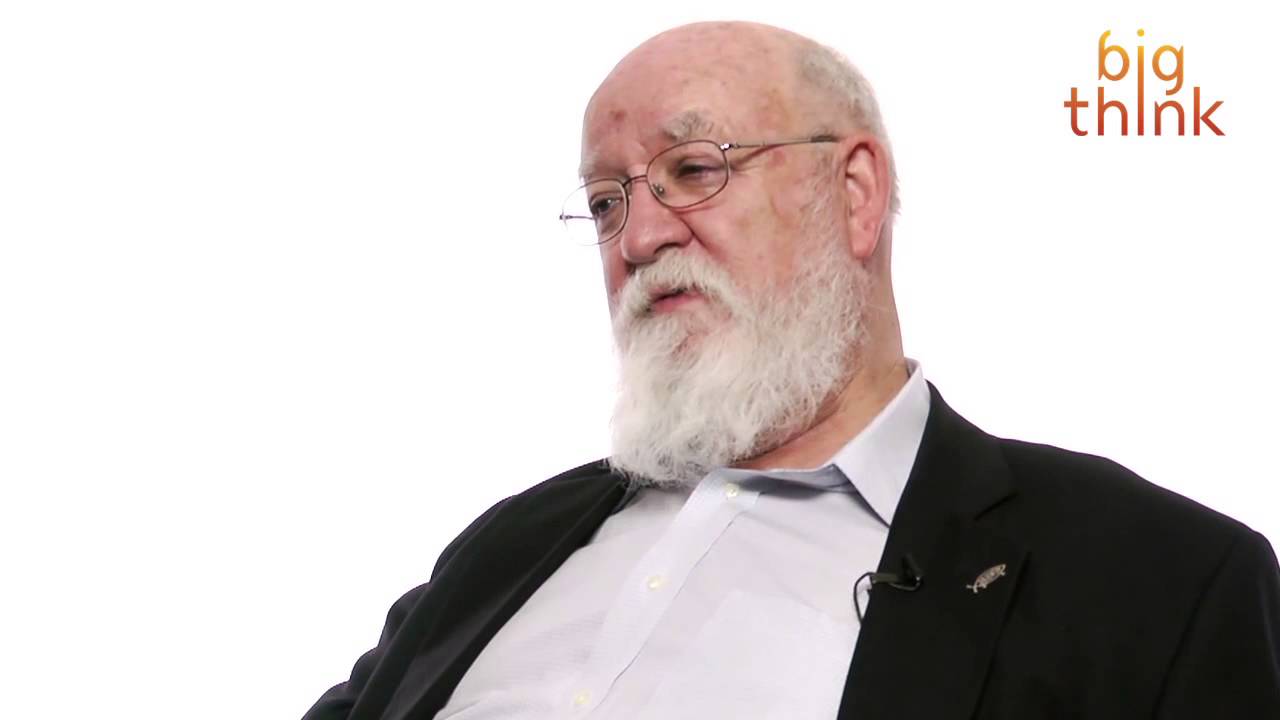
Daniel Dennett: An Introduction to Intuition Pumps
New videos DAILY: https://bigth.ink
Join Big Think Edge for exclusive video lessons from top thinkers and doers: https://bigth.ink/Edge
———————————————————————————-
The human brain works in a pretty specific way, and a lot of those ways haven’t changed over the years. Specifically, in the way humanity loves. While this may not the most romantic era of human history, the endorphin rush is the same as it was when Shakespeare was ushering in the most epic love story of all time. Biological anthropologist and author of The Anatomy of Love Helen Fisher assures us that nothing about the feelings or practices of love has been changed by online dating. People still flirt as they used to. Heart rates still pound when they meet. The biology is the same.
———————————————————————————-
HELEN FISHER:
Helen E. Fisher, Ph.D. biological anthropologist, is a Senior Research Fellow at The Kinsey Institute at Indiana University, and a Member of the Center For Human Evolutionary Studies in the Department of Anthropology at Rutgers University. She has written six books on the evolution, biology, and psychology of human sexuality, monogamy, adultery and divorce, gender differences in the brain, the neural chemistry of romantic love and attachment, human biologically-based personality styles, why we fall in love with one person rather than another, hooking up, friends with benefits, living together and other current trends, and the future of relationships — what she calls: slow love.
———————————————————————————-
FOLLOW BIG THINK:
📰BigThink.com: https://bigth.ink
🧔Facebook: https://bigth.ink/facebook
🐦Twitter: https://bigth.ink/twitter
📸Instagram: https://bigth.ink/Instragram
📹YouTube: https://bigth.ink/youtube
✉ E-mail: info@bigthink.com
———————————————————————————-
TRANSCRIPT:
Helen Fisher: People think that modern technology is somehow changing love. It’s not changing love. The basic brain system for romantic love evolved millions of years ago. It’s not going to change whether you meet somebody on Tinder, on Match.com or in the library or on the skating rink or in church. The brain doesn’t change. And the moment that you meet somebody in a coffeehouse, in a bar, on a park bench, wherever it is they ancient human brain clicks into action and we court the way we always have. We smile the way we always have. We flirt the way we always have. We listen the way we always have. We try to size up the person the way the brain has always been sizing people up. But modern technology is changing how we court. In fact, you know, I work with Match.com, the Internet dating site and I’m their chief scientific advisor. And they have an algorithm. There’s all kinds of algorithms out there. But these are not dating sites. These are introducing sites. Once you go out with the person and meet them wherever you’re going to meet them the ancient human brain clicks into action and you court the way we always have. But they are introducing sites and they’re algorithms are very useful.
I mean, you know, most of us have this love map of what we’re looking for and you’ve got to pair up somebody. You have to offer dates of the right age, the right proximity whether they’re five miles away or 50 miles away. The right background, the right educational level, some of the right interests. So dating sites can go so far, only so far, with their algorithms to give you the broad basics of what you’re looking for. That we can provide for you so that you spend less time, you know, kissing frogs.


@arthurwieczorek4894
November 15, 2025 at 6:36 pm
Given a proposition you want to analyze. First reverse it. What is the opposite of the statement? or What is the opposite of a key word in the statement? To go further, restate the proposition in different terms. These approaches are meant to give you different intuitions about the proposition you're focused on.
@QuesQueriosityQuabinet
November 15, 2025 at 6:36 pm
"Intuition pumps" sounds like an aka for grad students.
@arnabkumarbanerjee8150
November 15, 2025 at 6:36 pm
Intuition pump is parable
@justsaying9483
November 15, 2025 at 6:36 pm
My like is like a bike with no wheels,it’s not going anywhere fast..
@foorwq7816
November 15, 2025 at 6:36 pm
Tweeking is not always a good idea…. try that with an active detonator !!!
@marcusaurelius9407
November 15, 2025 at 6:36 pm
Does this explain Jordan Peterson banging on about mythology?
@jercarp84
November 15, 2025 at 6:36 pm
Just go read Socrates it is still relevant today. Most modern philosophers twist his lessons to fit their own narrative. If you do go and read just the books on the republic you will see what I mean.
@bryanroland9402
November 15, 2025 at 6:36 pm
Here's a link to Mitchel and Webb's intelligent and very funny deconstruction of a famous story told to illustrate a moral https://youtu.be/OIVB3DdRgqU Enjoy!
@traumkapitan
November 15, 2025 at 6:36 pm
"thought experiment to direct one to see something in a clearer or different or more intuitive way" ….hmmm kind of saying anything and nothing to me, at least at my level of understanding. … does a thought experiment not might block action as well, by overthinking, common in western culture. I thought intuition was more about direct action. like improvising for instance : jazz, butoh dance, automatic writing (of course intuition does not necessary need to lead to a product or labeled creation) – please help us out. give us a straight example?
@secretwithheld8883
November 15, 2025 at 6:36 pm
is that pin a Darwin fish or a Jesus fish? I think it's a Darwin fish.
@xxluaxx6
November 15, 2025 at 6:36 pm
❤️
@ACE999
November 15, 2025 at 6:36 pm
Some examples might have been useful.
@scarletovergods
November 15, 2025 at 6:36 pm
I think he should've given some examples of intuition pumps to make the topic less confusing.
@adamthornton7880
November 15, 2025 at 6:36 pm
Can I have an example?
@PacRimJim
November 15, 2025 at 6:36 pm
Yak. Yak. Yak. Intuition pump. Yak. Yak. Yak.
No definition or example of intuition pump.
@akcrace
November 15, 2025 at 6:36 pm
If we already have a word for it "thought experiment" why do we need a new one "intuition pump"? He's just trying to create a meme.
@cybersekkin
November 15, 2025 at 6:36 pm
tweak it and it falls apart 🙂 I love it rather than just accepting it because it was presented by a smart guy. Even the smartest can make mistakes and have invalid assumptions.
@JamesRJKR
November 15, 2025 at 6:36 pm
Hey big think, could you ask for examples when doing interviews? Thank you
@cj-seejay-cj-seejay
November 15, 2025 at 6:36 pm
thank u for posting a video with santa in it today
@troyarmstrong434
November 15, 2025 at 6:36 pm
Advanced alchemy.
@nahedhb4990
November 15, 2025 at 6:36 pm
This guy is nonsense
@huckshmuck2490
November 15, 2025 at 6:36 pm
i find that some problems consistently require the same pump like flat tires
@WalkOnNick
November 15, 2025 at 6:36 pm
I kept on waiting for an example.
@UsernameNULL755
November 15, 2025 at 6:36 pm
what is he talking about?
@Martial-Mat
November 15, 2025 at 6:36 pm
I know that Daniel is quite well regarded, but I'm not massively impressed with him. It seems that all he is saying here is, "Think about what you're being asked". Big whoop.
@sd4dfg2
November 15, 2025 at 6:36 pm
Common tool for politicians too. They want you to draw a conclusion without thinking it out.
Comments are closed.