
Can You Experience Art Online? | Philosophy Tube
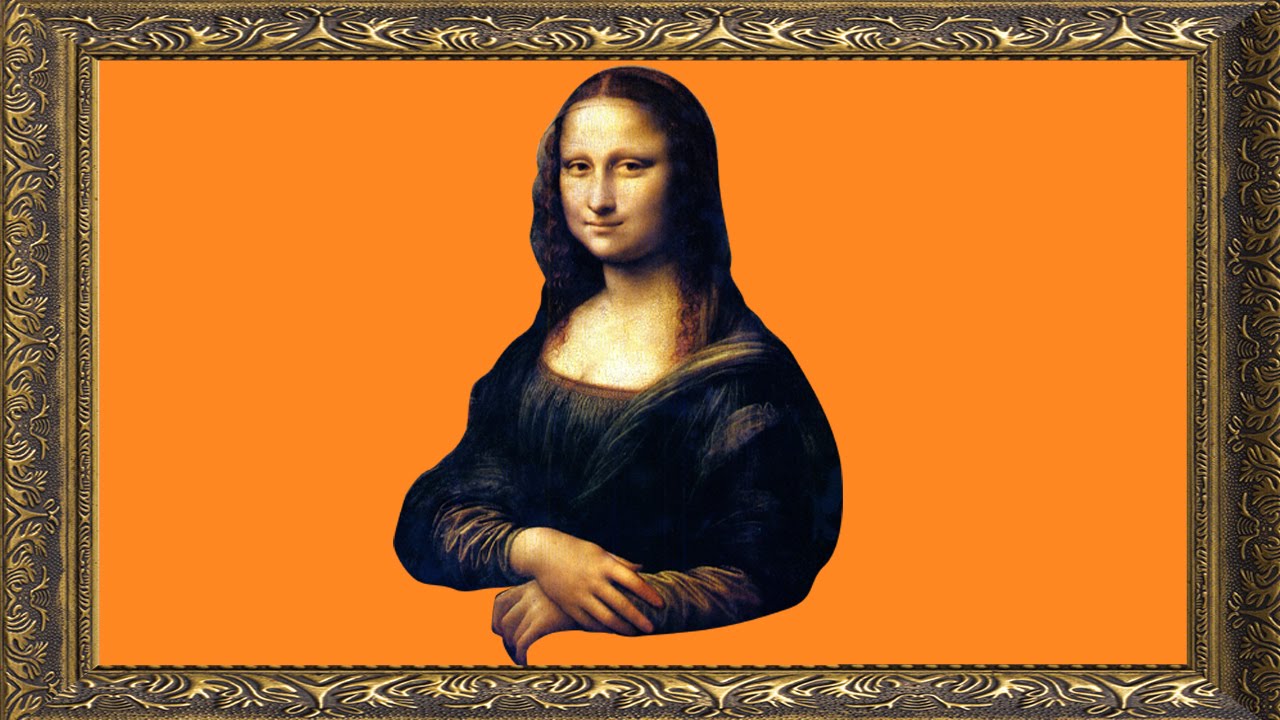
How might the Internet, virtual reality, and technology affect art? Will new media make galleries obsolete? Are Da Vincis, Michelangelos, and Van Goghs still valuable as digital reproductions?
Subscribe! http://tinyurl.com/pr99a46
Patreon: http://www.patreon.com/PhilosophyTube
Audible: http://tinyurl.com/jn6tpup
FAQ: http://tinyurl.com/j8bo4gb
Facebook: http://tinyurl.com/jgjek5w
Twitter: @PhilosophyTube
Email: ollysphilosophychannel@gmail.com
Google+: google.com/+thephilosophytube
realphilosophytube.tumblr.com
Recommended Reading:
Lev Manovich, The Language of New Media
Nathan Jurgensen, Digital Dualism versus Augmented Reality http://tinyurl.com/hkx5fme
and
Defending and Clarifying the Term Augmented Reality http://tinyurl.com/gotssjd
and
Digital Dualism and the Fallacy of Web Objectivity http://tinyurl.com/jx3kqur
Oliver Lennard, How to Really be a YouTube Star http://tinyurl.com/p873nwk
L.W. “Ruby, Layers of Seeing and Seeing Through Layers: The Work of Art in the Age of Digital Imagery,” in The Journal of Aesthetic Education
Walter Benjamin, “The Work of Art in the Age of Mechanical Reproduction” http://tinyurl.com/p8wqozt
Adam Butler, How Social Media Habits are Revolutionising the Way Art is Experienced http://tinyurl.com/j6yfj6r
Glow shine animation by AAVFX: https://www.youtube.com/watch?v=yNAaC4qXVyQ
Music by Epidemic Sound (epidemicsound.com)
If you or your organisation would like to financially support Philosophy Tube in distributing philosophical knowledge to those who might not otherwise have access to it in exchange for credits on the show, please get in touch!
Any copyrighted material should fall under fair use for educational purposes or commentary, but if you are a copyright holder and believe your material has been used unfairly please get in touch with us and we will be happy to discuss it.


@Baszihter
October 8, 2025 at 6:54 pm
"fully" is a scam. There is no canonical way.
@BearTheGrudge
October 8, 2025 at 6:54 pm
What snobbish buffoonery. Attributing an aura to something and ascribing its original as having a special significance helps one person: art dealers. Was he an art dealer? Did he have a dog in the race?
@rekall76
October 8, 2025 at 6:54 pm
i would like to suggest that there are multiple valid modes by which to experience art… consider that MoMA acquired a representation of Shigetaka Kurita's original 176 emoticons for NTT DoCoMo so that people can experience & appreciate them not just icons on the tiny LCD screens on which they first appeared, but as standalone expressions of ideas… the experience of seeing them larger-than-life as static objects and not as pixelated characters on a device from 1999 that you can type, delete & rearrange at will is not less-than… it's just different
@LuneFlaneuse
October 8, 2025 at 6:54 pm
I guess this topic is also very relevant in relation to NFTs nowadays.
@AudioPervert1
October 8, 2025 at 6:54 pm
So boring this historicism… These white men can never reach beyond a Mona Lisa or the same dull cliches of art europea … And the answer is no … One cannot appreciate anything inside this idiotic economy of attention 🕳️👎🏽⚰️
@MrMarsFargo
October 8, 2025 at 6:54 pm
1:19, THIS IS ACTUALLY A REALLY GOOD PARALLEL TO FILM PRESERVATION!!
As a filmmaker, people who don't make movies often assume that filmmakers disdain for digital cameras (when they were first introduced) was an arbitrary or nostalgia-driven disdain. What people don't understand is that, in the late 1990s, celluloid film could shoot at a typical resolution of 4K-6K; they wouldn't have used those terms back then, but that's the correct resolution. Digital cameras, when first introduced, could only shoot in 1K (720) at best, and maybe 2K (1080) for the really expensive ones. Digital projectors and televisions also could only project 2k, meaning something shot on film might be presented at a lower resolution than it was actually filmed at! So filmmakers refusing to switch digital, when it first arrived, wasn't cognitive dissonance so much as it was a practical reason technically…
Hence why you don't see them complaining about digital anymore; it's finally caught up to film, NOW being able to shoot at resolutions of 6K-8K. Filmmakers no longer have to settle for lower quality when shooting digital, like they originally did, hence why it now receives generally less criticism. Thus proving the point that digital art isn't INTRINSICALLY bad, just bad in technological context.
@lightanddarklove
October 8, 2025 at 6:54 pm
When it comes to things like films, concerts and movies, the only thing you will sometimes lose out on is audio quality if you’re not listening to the subject with high quality speakers or headphones. The advantage is you can pause and rewind if someone talked over a line or drew your attention away and you missed something. With paintings, drawings and 3 dimensional art (sculptures, tapestries, glassworks, ceramics, ect.) you lose out a bit on depth and texture, which is a minor thing compared to the overall composition and contrast. With books you lose very little, mainly the ability to transfer ownership or loan it, but some people can gain eye strain that they wouldn’t have with physical media. With news articles the only loss besides what was mentioned with books but also newsprint texture but personally I don’t like that at all, so I prefer to read digital articles. And then for any TV show, it’s impossible to watch not on a basic TV screen, computer, tablet or phone with the rare exception of screenings at conventions or similar events in large conference rooms
@riliame
October 8, 2025 at 6:54 pm
It depends on what art it is. Visual artworks, like paintings, there is only one original of, and therefore something is lost when it's online, but artworks like music or theatre can be reproduced and re-invented by different people, and sure, there was an original casting of Hamlet in Shakespeare's time, but there's a reason why conductors have different visions for the same piece of music or a play comes with new settings and styles depending on director. Such pieces are meant to be re-imagined. On the other hand though, I'd rather go through the trouble of hearing a symphony 'live' in the concert hall than listen to it online, for 'living music' created right then and there, is better. Perhaps because there are no other digital distractions around, just the music and the orchestra on stage.
@turtlezen4292
October 8, 2025 at 6:54 pm
I've seen the Mona Lisa IRL. It's behind bulletproof glass and constantly surrounded by crowds. I couldn't get near it. It was NOT a transcendent moment. I got a much better look at it in a high res close up photo in a book.
…that being said, I got a much closer look to some Monet's and Von Gogh's a few years after that, and becaue I was close enough to see the blobs of paint on the canvas, I had a much better appreciation for Impressionism after that.
But yeah, anyone excited about seeing the Mona Lisa in person?…don't get your hopes up too high.
@thomasfplm
October 8, 2025 at 6:54 pm
I'd say that the capacity of technology to reproduce it is the only thing that stops someone from fully appreciate an artwork thru the Internet.
On the other hand, if you go see the Mona Lisa in person, most of the time it will be so crowded that you won't be able to appreciate it there either.
@shaunrobertson9494
October 8, 2025 at 6:54 pm
Would totally be interested in your views on NFTs, if you get a chance!
@agiar2000
October 8, 2025 at 6:54 pm
This concept of the "aura" of the original thing strikes me as subjective. For an example that I found very interesting, I heard a story about a Westerner who traveled to China and was shown an old temple. I may be misremembering certain details here, but it was something like this: The traveler was told by the native Chinese tour guide that the temple was thousands of years old. The traveler marveled at the temple, remarking how well preserved it was, how well it had kept up over the centuries! The tour guide responded "Oh no, it hasn't kept up well at all, actually! It has actually burned down completely twice in that time!" To this, the traveler responded, a bit disappointed "Oh, so it's not the original." To which the tour guide responded in confusion "What? Yes, of course it's the original. This is the same temple that was built two thousand years ago."
The interesting dichotomy there is in what each person considers "original", what the "identity" of that temple is. Is it the physical beams of wood and blocks of stone that people first assembled two thousand years ago, or is it something more abstract? Perhaps the "aura" of the original temple exists only for people like the tour guide who see the identity as unbroken by the temple burning down and being rebuilt, as the "same temple" means to be built the same way, standing on the same spot, showing what it showed before.
@KarolaTea
October 8, 2025 at 6:54 pm
Tchaikovsky appreciation comment.
We'll probably never see old works of art the way they were meant to be seen. The Mona Lisa in the Louvre is lit by electric lights, you'll see it probably from a few feet away surrounded by a crowd of people. Was it meant to be seen that way? idk, the artist is dead, we can't ask them anymore lol. But I'd say having a perfect digital copy of it that captures not only the image but also the 3D layers of paint, that you can see in VR and experience the scale of it… yeah I don't think that's any worse than visiting a tourist trap for a quick glance.
Sure, it's *different*. Both are probably not what the artist intended. (If there was any intended viewing method at all.) But digital vs. meatspace doesn't seem to be the divide between correct and incorrect viewing.
@jamosreece1693
October 8, 2025 at 6:54 pm
I think there should be a distinction of digital; if you see a thing laying in your bed or out in public your thoughts will very (for better or for worse)
@CrisSelene
October 8, 2025 at 6:54 pm
Some art pieces exposed in museums were never meant to be viewed by a large audience, they were intimate pieces for bedchambers or miniatures given as gifts, illuminated books of prayer kept as cherished possessions. The original context can't be recreated anymore. I think it's completely fine to experience art online, as long as you understand the context in which it existed and from which it was created.
@pobsa56
October 8, 2025 at 6:54 pm
I come to this 4 years after the posting, but I feel moved to respond anyway…. I think what might be missing from this query is the fact that even when speaking about art that was not produced specifically for online, some works of art may BENEFIT from being viewed online and some will not. Speaking only from experience, having seen many beautiful reproductions of The Mona Lisa (in books and lithograph), like many people, I was a bit underwhelmed when I got to see it in the Louvre. Between its size and having to see it amongst a crowd, and at a remove, it had no "aura" to speak of and seems diminished by its surroundings. Being able to take my time with the photos in the books allowed for a deeper intimacy with the art than seeing it "in real life."
On the other hand, though I'd fallen in love with the work of Boticelli through books, there was nothing in the experience of seeing photos in books that could possible prepare me for the sheer monumentalism of the actual paintings in the Uffizi! Over 6' X 10' I felt almost overwhelmed with emotion. The same with finally seeing David at the Galleria dell'Accademia.
@D9992.
October 8, 2025 at 6:54 pm
I know I'm very late to this, but I looked for Shakespeare vlogs and I didn't find them. Did they get removed?
@bxlis
October 8, 2025 at 6:54 pm
I think this topic is more interesting if this is about contemporary art. Masters are masters.
@smartITworks4me
October 8, 2025 at 6:54 pm
Well, how about asking, "Can you appreciate Philosophy Tube if you see me in person and not just online?".. My answer would be, "I bet THERE IS A DIFFERENCE".
@theteddy906
October 8, 2025 at 6:54 pm
I think the aura could mean the history and connection you feel to the artist through knowing that they were there. That their hands created it and that their eyes saw the whole process and finished product yoy now see.
@UsotheMarshmallow
October 8, 2025 at 6:54 pm
I think that the eperience of seeing a piece of art through digital means can be different to seeing it in person but that that does not mean the act of seeing it digitally is lesser than that of seeing it in person. Ultimately you can have many different experiences seeing it in person, whether you searched the whole gallery first or went to it first, whether you were wearing glasses or not when you viewed it, what time of day you saw it etc. Of course, the context in which is was painted was also entirely different from seeing it in person! Seeing the art on a computer screen is no different than these variations. There is value in seeing the piece in person even if you already saw it digitally since there's a different experience to be had but someone who has seen it in person doesn't have a better or worse understand than you.
@Milhomens23
October 8, 2025 at 6:54 pm
Benjamin is a complicated fellow
@MissLynnGleason
October 8, 2025 at 6:54 pm
I could write a thesis here, but I won't. I think seeing something online v. seeing it in person is more of a debate of knowledge v. experience or theory v. practice. You can watch a concert on television and take pleasure from it, but it's more exciting when you're physically AT the concert, isn't it? Or watching educational and entertaining video essays on YouTube by young mega minds v. meeting said mega mind and talking over a beer in pub. The former is fantastic, but the latter would be mind blowing.
@κρίση
October 8, 2025 at 6:54 pm
Yes it is the same on here and in real life. Because it's behind glass in real life. Maybe it needs to be a monitor that can show the scale but it's absolutely underwhelming. That being said the Sistine chapel is fucking breathtaking in person no matter your religion.
@vloraberisha4783
October 8, 2025 at 6:54 pm
i liked the opposition you mention in the end of the video
@joseemarchand9571
October 8, 2025 at 6:54 pm
As an art history student, I think there is a lot you aren't taking into consideration.
First, there's definitely a distinction to make between a work intended for web (your Shakespear vlog) vs a work that isn't intended to be seen in that context. If your Shakespear remake was intended to be seen in person, like a theatre piece, but it was filmed and put on the internet, it would be different.
Second, you can't see by yourself the size of the artwork, take Mona Lisa for example. I see it on my tv screen, you see it on your computer screen, someone else on a phone: it makes the size of the work different than in real, and that's why people are usually surprised when they see it in person because it's pretty small. It makes you think about the importance such a small painting can have in history, and what can qualify as a true master piece. Size definitely matters for an artwork : historically, huge paintings tended to be historical scenes because it was considered more important than let's say, a portrait or a still life. A gigantic nude wouldn't have the same impact than a tiny religious scene. A small piece requires you to get closer contrary to a bigger piece, or maybe you need to do both to truly appreciate it.
Third, the finish of the painting (depending if it's glossy, iridescent or matte) isn't something you can translate through a picture, and it can force you to move to see certain things. An artwork can also require a specific point of view for other reasons, like The Ambassadors from Holbein, which presents an anamorphosis. Also, making the viewer move around a painting makes it important to take time and space into consideration.
Third, the context matters. You can see the other artworks around it. In fact, museum curators are in charge of organizing artworks in a logical way. Maybe the exposition is meant to show the progression of certain practices (from figurative to abstract, for example); maybe the exposition is meant to contrast different styles that coexisted at the same period, etc, etc. Depending if the walls are full of paintings (like it was in Paris Salons), if the walls are white and almost empty (like in today's museums). When the walls used to be full of paintings, those considered less important were put in less convenient/visible spaces than others considered more important. What we chose to display and exclude and how we place it are very important. It is also very different to see a huge nude painting in a silent museum surrounded by strangers than alone at home on your computer screen.
All of these elements can be part of our comprehension of art, and they are sometimes meant to be feel rather than rationally understood, so everything you've experience about the artwork is an information as valuable than the image itself that the viewer can put together. Imagine the temptation of touching a huge canevas written TOUCH ME with thick paint vs the same thing on your computer screen. I think it is really essential to be in the presence of an artwork to truly understand (if you intend to make an analysis), but it's better to have access to all these images that we will never see in real than none at all for the average person. Sorry for the long ass answer, thanks for reading.
@BWGrantBarnes
October 8, 2025 at 6:54 pm
So sorry to see that you've removed all content from Shakespeare Vlogs.
@robinisomaa
October 8, 2025 at 6:54 pm
In 2016, I had the opportunity to attend a screening of a film called "Too Late" (Dennis Hauck, 2015). It was a crime drama, filmed in five 22-minute uncut shots. And I will probably never see it again. Not because I didn't like it; some have criticized it for being a bit too derivitive of early Tarantino, but I like early Tarantino. No, I will most likely never see it again because the director has said he will never release it online or on DVD/Blueray. The film was shot on 35mm film and was never converted into any kind of digital format. It had a very limited release, mostly film festivals and such, where it was screened using an old-school projector. The director has stated that he misses the look of 35mm films and wanted to make a movie that would only be seen in that format.
When I saw it, as one of around 15 people in Turku, Finland, we were in an old factory, part of which had been converted to a small movie theater (read: it had a screen and the seating of a movie theater), at the last screening of the film in Finland. Everything about that setting – from my friend's weird dried superfood berries he for some reason had brought as a snack, to the knowledge that I would most likely never see this film again – contributed to my experience of the film.
Yes, the whole situation was pretentious as fuck.
I started thinking about this recently, after watching an hbomberguy video about "The Power of VHS".
@AdriLeemput
October 8, 2025 at 6:54 pm
You should have taken The Nightwatch as an example. Mona Lisa is a small painting, and you probably will see it with 10 rows of people in front of you, or packed like a group of sardines. The other one is a huge painting, that you can always see in full.
Most of the people will appreciate the Mona Lisa way better here, compared to the Louvre.
@odedsayar4345
October 8, 2025 at 6:54 pm
I recently visited the Dalì museum in Spain, and I get the Aura thing, as seeing some of his original works that I saw online/printed countless times gave me a feeling of awe and excitement, even when referring only to the "2D" works (paintings and not sculptures or halls).
Some quality may well be lost when seeing 2D projection that was captured, compressed, and displayed on a screen, and also when hearing something that was recorded, formatted and transmitted through 2 speakers (or headphones, which are also speakers).
However, other qualities can be gained, by say, a good angle of a photograph/video, a well rhythmed reading of a verse/monologue, a youtube clip providing an interpretation of a song, or featuring a song in order to interpret a video etc.
Even if visiting your backyard while you're performing a Shakespeare monologue and seeing it live is somehow better than watching the video, the context of the latter in a blog with your other pieces has its own artistic merit (and both are different then, say, reading it out of a book).
@SebastianSeanCrow
October 8, 2025 at 6:54 pm
4:04 talking about interactive audiences and stages makes me think of Rocky Horror Picture Show
@kindoflame
October 8, 2025 at 6:54 pm
Here is a problem; when I watched Akira I recognized that it was a work of art with a powerful message, but I was not about to identify what that message was. I knew that Akira was a masterpiece without knowing what it was about. Literally, I would not have been able to tell you what the plot of that movie was. Was I able to fully appreciating it?
@aagantuk7370
October 8, 2025 at 6:54 pm
Whatever happened to Shakespeare Vlogs?
@miriamquintana755
October 8, 2025 at 6:54 pm
Ollie, where did Shakespeare vlogs go?
@Amy-zb6ph
October 8, 2025 at 6:54 pm
I happened to be in France when I was 16 and we went to see the Mona Lisa. Maybe I'm not as artistically inclined as some other people, but the main experience was that I was seeing the original Mona Lisa and it was probably due to the placebo effect. As a painter, I can say that the Mona Lisa is an extraordinary painting but I can't say that it was worth flying to Paris from the US to see. We saw a lot of other things that the thing that impressed me the most was actually Auschwitz because I found out, for the first time, that some of my family members died there. It was much sadder but much more impactful of all the things that I saw when I was in Europe. I do wish I could go back because I have a lot of respect of what you guys have done since they implemented the Euro. I still have coins from France and many other countries before the Euro.
@thethirdbroomstick
October 8, 2025 at 6:54 pm
loosely related you should watch certified copy great film
Comments are closed.