
Scientists Are Alarmed by What We’re Discovering in Deep Space
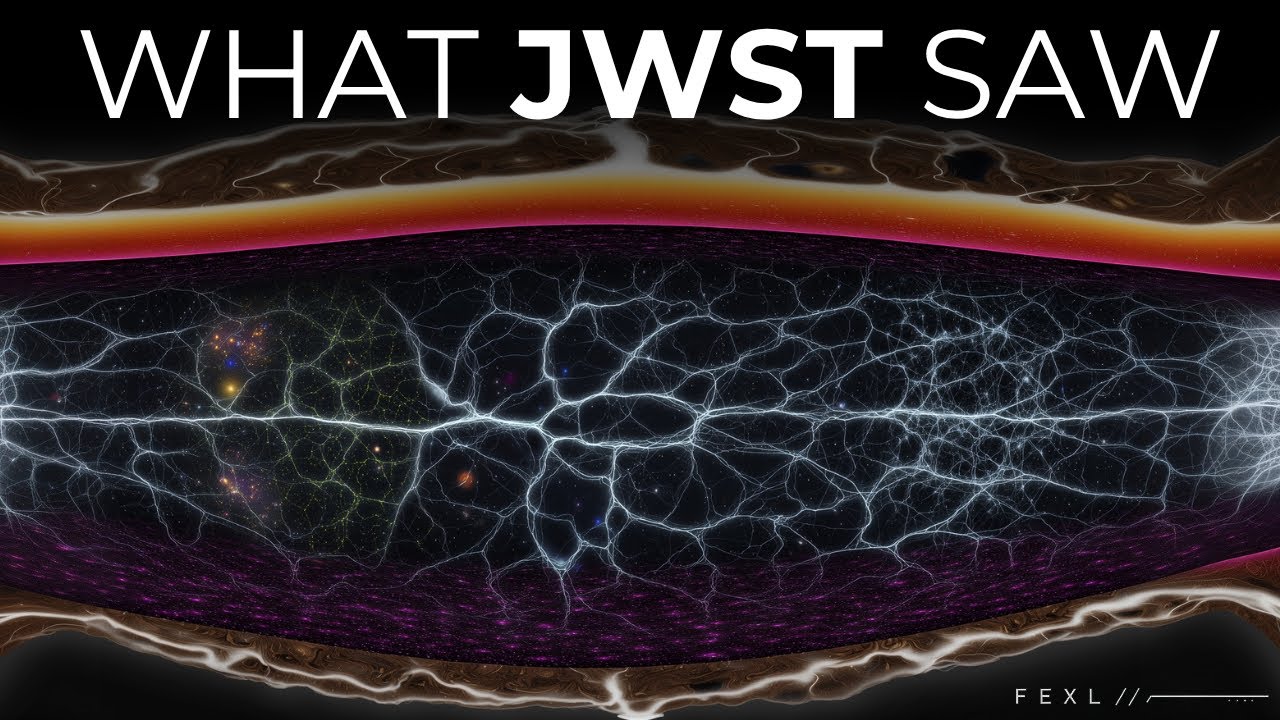
Astronomers using the James Webb Space Telescope (JWST) have identified a population of “mysterious red dots” in the early universe. Unlike typical young, blue, and irregular galaxies, these objects appear compact, sharply defined, and exceptionally red.
First identified during the Cosmic Evolution Early Release Science (CEERS) survey, these points of light suggest the existence of unexpectedly massive galaxies dating to as early as 600 million years after the Big Bang, challenging existing models of galaxy formation and evolution.
▀▀▀▀▀▀
Timestamps:
0:00 James Webb
1:45 What We Were Supposed to See
4:33 The Discovery
11:00 The First Theory That Broke
16:02 The Second Theory That Broke
20:18 Enter the Black Hole Star
26:15 The Other Ideas Still in Play
▀▀▀▀▀▀
Fexl Spanish: https://www.youtube.com/@fexl_es
Fexl Portuguese: https://www.youtube.com/@Fexlpt
Fexl Ukraine: https://www.youtube.com/@fexl_ua


@stuartjohnston7888
June 18, 2026 at 6:13 am
Good job with helping to reduce the accumulated confusion surrounding the LRD.
@earthforge3578
June 18, 2026 at 6:13 am
Can. You please do a episode on the inflation escape volsitiy vs lightspeed cus inflation states our oversible horizon should be 14.4 bilion radius yet our huble horizon is 43.8 radius
@Bag-Of-Hammers
June 18, 2026 at 6:13 am
black hole Sun, won't you come….Wash away the rain…..
@seantheimp
June 18, 2026 at 6:13 am
Imagine being the first person to look at the data. Stare at it for a moment. Realize that you, an experienced astronomer who knows more about the universe than Carl Sagan did, look at a little red dot in a picture, and just ask yourself, "What the ****** is that?"
@Brokeninternets_
June 18, 2026 at 6:13 am
I thought they were weird blackhole stars?
@HeroesforDemocracy
June 18, 2026 at 6:13 am
The only big bang to ascribe to is the TV series.
It is reasonable to assume that space time is not linear as it is to assume it is.
If you calculate for all the spectrum of radiation and not just inferred, then you might get a better understanding of the little red dots.
@PtolemyJones
June 18, 2026 at 6:13 am
It means we don't know very much, which should be obvious to any real scientist.
@andrehenkel1981
June 18, 2026 at 6:13 am
What if they are White Holes, …or maybe a**holes?! 😅
@RHelenius
June 18, 2026 at 6:13 am
/r/anythingbutmetric
Good job on the football field seats…. fuck me the world is getting stupider and stupider
@BrewBlaster
June 18, 2026 at 6:13 am
Isn't it possible there were different areas that had their own localized contractions and big bangs?
@junkdubious
June 18, 2026 at 6:13 am
Considering we're seeing photons emitted from the surface, after being through 100ly of being 'random-walked', what would be 'age' of those photons we're seeing? For instance, the sun, whose core emit photons at far less a distance to the photosphere before they're visible takes 10k to 140k yrs.
@FULLTILTSWIFF
June 18, 2026 at 6:13 am
the big bang guys ignore all the pile of data against the big bang, it's just ridiculous
@DavidClark-g1y
June 18, 2026 at 6:13 am
"they existed within the first billion years after the big bang" … is the problem. it assumes the big 'something from nothing' event actually happened at the prophesied time. but the temperature they found is wrong for that to be true. and the telltale dust cloud prophesied is not seen (this cloud was headline 'what we are going to see' news before webb. it is now no longer mentioned (and is actually suddenly buried news in astrophysical literature.) and the red shift information you are getting does not match that prophesied by astrophysicists' religion. the twisties they are doing now every time a new data point arrives reminds me of the twisties done by astronomers and scientists clutching desperately to the earth-centric view of the universe centuries ago. and the twisties done to describe anomalies when the milky way was accepted as 'the whole universe' 1 century ago.
@scary_guy_541
June 18, 2026 at 6:13 am
Black Hole Sun
@Vintageladyy
June 18, 2026 at 6:13 am
❤❤
@kalrandom7387
June 18, 2026 at 6:13 am
If you play video games it's a easy solution, they are just the edge of the map.
@2ndHandMediaMan
June 18, 2026 at 6:13 am
First 😀