
First lynx family ever documented in Minnesota’s only national park!
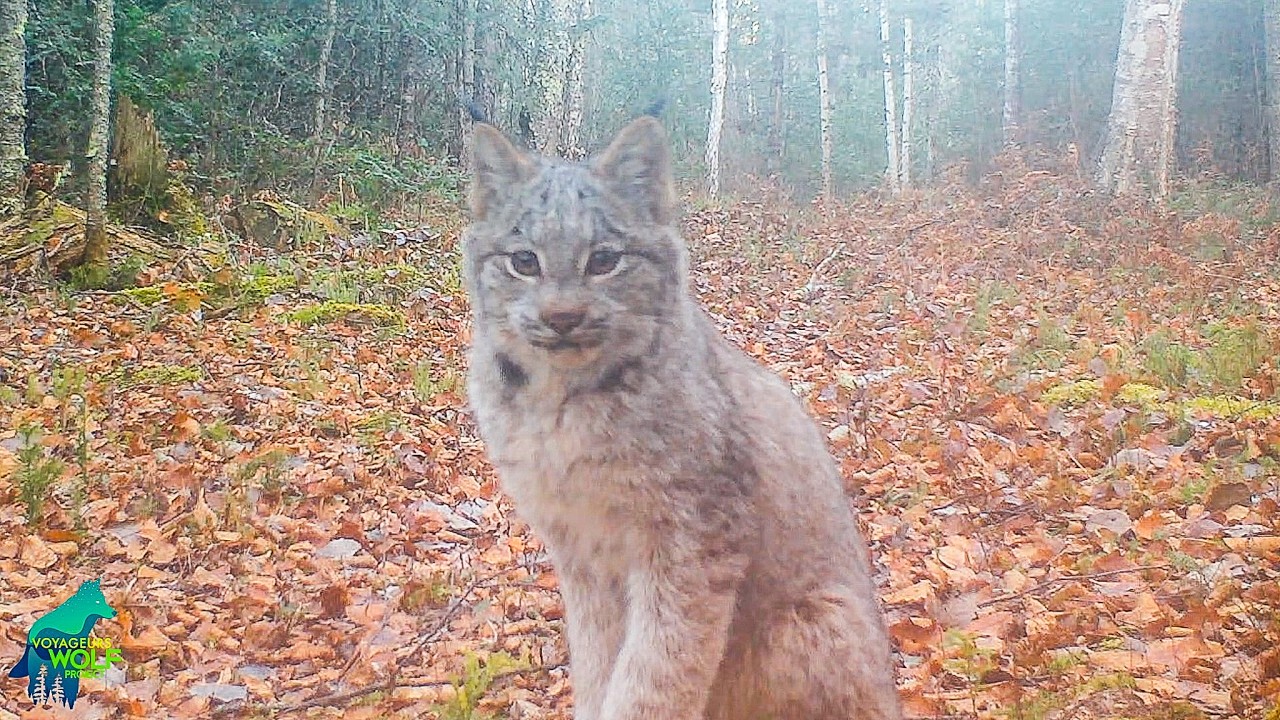
Last fall, we documented the first lynx kittens (a mom and two kittens) ever observed in Voyageurs National Park. And our footage from last winter indicates the two kittens likely survived to their first birthday!
The footage here shows three observations of the trio in November 2025, February 2026, and the last day of March 2026. So turns out, based on this, that lynx can successfully rear kittens in the park after all…something biologists weren’t certain about for many years.
Although lynx have been observed/documented in the park sporadically for several decades, there has never been evidence of kittens in the park (i.e., a breeding population of lynx). As a result, most lynx in and around Voyageurs are likely transitory individuals roaming large area.
From 2000 to 2004, biologists with the National Park Service made a concerted effort to study lynx in the park. They only documented the presence of one male and one female, and concluded “lynx were either transient or present at a low density”.
Another study from 2007-2008 in and around Voyageurs National Park using trail cameras and snow tracking did not detect the presence of lynx. However, they noted that there were some sightings of lynx outside of the park with one unconfirmed report of a female lynx with a kitten observed to the west of the park.
The researchers concluded that “even though patches of high-density snowshoe hare habitat exist in the Voyageurs National Park area, the low density of snowshoe hares at the landscape level would not support resident lynx”.
Based on this research and some subsequent work, researchers with the park concluded in 2015 “it does not appear that there are currently resident lynx”.
In fact, the researchers in 2012 concluded: ‘only three confirmed observations of adult lynx have occurred within the boundaries of VNP since 2001”.
Obviously, studying these elusive animals in places like Voyageurs has historically been difficult because trail camera technology was not what it is today (or did not exist).
Skip forward to today: we now routinely get numerous observations of lynx each year in Voyageurs National Park as well as outside the park. Many observations are likely of the same few individuals wandering around, though, based on physical appearances, it seems we are capturing observations of more than 1 or 2 lynx.
Nonetheless, this observation of a lynx with two kittens shows that lynx can reproduce in this area, though such occurrences are likely rare. One observation of reproduction is not evidence of a self-sustaining resident population but it suggests it might be possible.


@combatwombats
October 19, 2026 at 2:19 am
Wonderful! And I love how even wild cats are still so clearly cats. <3 The curious little SNIFF SNIFF, so cute.
@timhofstetter5654
October 19, 2026 at 2:19 am
Fuzzly li'l pajamas.
@MinnesotaBeekeeper
October 19, 2026 at 2:19 am
Ah they have been around the Saint Croix for decades.
@Corkfish1
October 19, 2026 at 2:19 am
I always thought they really beautiful animals
@brentcormier6775
October 19, 2026 at 2:19 am
I love their big floppy paws!
@ellab8897
October 19, 2026 at 2:19 am
Such beautiful animals! This is a great opportunity to learn more about them!
@metrocardful
October 19, 2026 at 2:19 am
bless them
@Alec-Garou
October 19, 2026 at 2:19 am
Cool! 😎
@lb1460
October 19, 2026 at 2:19 am
They're incredible.❤
@kellydavid7408
October 19, 2026 at 2:19 am
😊♥
@laurahunter1690
October 19, 2026 at 2:19 am
I just want to cuddle them!
@Kim-lc3fv
October 19, 2026 at 2:19 am
I'm surprised that they haven't always lived there.
@DanielleJohnson-p6i
October 19, 2026 at 2:19 am
😂❤🎉Cuteness Overload ❤ PRAISE JESUS ALWAYS ANYHOW AND EVERMORE ❤
@SAINTNIQQQQUEURRRR
October 19, 2026 at 2:19 am
❤GOD BLESS ALL READING THIS ❤
UNTIL JESUS CHRIST RETURNS
ON GOD'S JUDGEMENT DAY ❤
❤GOD BLESS THE PRECIOUS FLUFFS❤
@TochterausElysium8
October 19, 2026 at 2:19 am
Das ist mit Abstand das Schönste und Herzerwärmendste und Drolligste was ich heute gesehen habe.
Vielen lieben Dank 😊
@tomanderson798
October 19, 2026 at 2:19 am
Adorable, furry killing machines
@baqaqipekhebi7148
October 19, 2026 at 2:19 am
So beautiful! 😍
@GeorgeFitness-yo8bl
October 19, 2026 at 2:19 am
They should get these beautiful cats out of Minnesota
@JoeVideoed
October 19, 2026 at 2:19 am
So the name for the WNBA team is justified after all.
@saradejesus9869
October 19, 2026 at 2:19 am
😍😍😍😍😍
@Zircon-GOE
October 19, 2026 at 2:19 am
Los Primeros ❤❤❤
@tymz-r-achangin
October 19, 2026 at 2:19 am
We want more – we want more 😃