
Why the US photographed its own WWII concentration camps
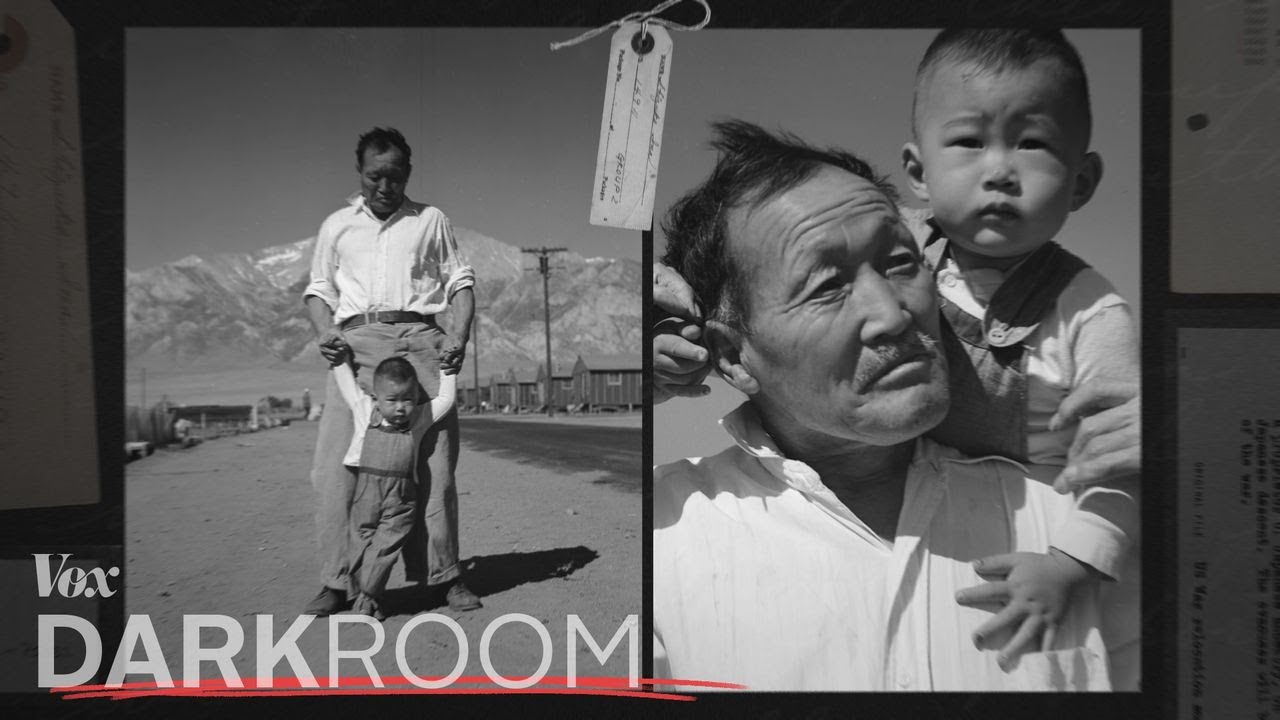
Dorothea Lange’s photos of the incarceration of Japanese Americans went largely unseen for decades.
Subscribe and turn on notifications 🔔 so you don’t miss any videos: http://goo.gl/0bsAjO
US President Franklin D. Roosevelt passed Executive Order 9066 in February 1942 — two months after Japan’s bombing of the US Navy base at Pearl Harbor. It empowered the US army to designate strategic “military areas” from which any and all people deemed a threat could be forcibly removed. This began a process of placing 120,000 Japanese Americans in concentration camps during World War II.
To control the narrative around the removal, the government created a new department, the War Relocation Authority, and hired photographers to document the process. One of those photographers was Dorothea Lange, who had become famous during the 1930s for her Great Depression photographs for the Farm Security Administration.
Her images featured Japanese-American people in the weeks, days, and hours leading up to their incarceration in the camps, and captured expressions of dignity, resolve, and fear.
Most of Lange’s candid photos of the removal process weren’t approved for publication by the War Relocation Authority and were “impounded” for the duration of the war. They weren’t seen again widely until 1972, when her former assistant pulled them from the National Archives for a museum exhibit about the incarceration of Japanese Americans, called Executive Order 9066.
The photos became part of a redress movement for Japanese Americans in the 1970s and 1980s, which ultimately resulted in the Civil Liberties Act of 1988, a bill that approved reparations for survivors of the camps.
Darkroom is a history and photography series that anchors each episode around a single image. Analyzing what the photo shows (or doesn’t show) provides context that helps unravel a wider story. Watch previous episodes here: https://www.youtube.com/playlist?list=PLJ8cMiYb3G5ce8J4P5j5qOEtYR94Z3DQs
Further reading:
Dorothea Lange’s WRA photos at the University of California:
https://calisphere.org/collections/24123/?q=&sort=a&rq=dorothea%20lange
Dorothea Lange’s WRA photos at the US National Archives:
https://catalog.archives.gov/search?q=%22lange%22&f.ancestorNaIds=536000&rows=100
Satsuki Ina’s award-winning documentary, “From a Silk Cocoon”:
https://www.fromasilkcocoon.com/
I interviewed Elena Tajima Creef for this story as well, check out her book “Imaging Japanese America”:
https://nyupress.org/9780814716229/imaging-japanese-america/
The Densho Encyclopedia, a rich resource for researching this topic:
https://encyclopedia.densho.org/
Densho’s terminology guide for talking about the incarceration of Japanese Americans during WWII:
https://densho.org/terminology/
More information about language and semantics from NPR, specifically about the choice to refer to the camps as “concentration camps” instead of “internment camps:” https://www.npr.org/sections/publiceditor/2012/02/10/146691773/euphemisms-concentration-camps-and-the-japanese-internment
Linda Gordon and Gary Okihiro’s book about Lange’s WRA photos, “Impounded”:
https://wwnorton.com/books/9780393330908
Ansel Adams’s WRA-approved 1944 book of photos from the Manzanar camp, “Born Free and Equal”:
https://www.loc.gov/pictures/collection/manz/book.html
Vox.com is a news website that helps you cut through the noise and understand what’s really driving the events in the headlines. Check out http://www.vox.com.
Watch our full video catalog: http://goo.gl/IZONyE
Follow Vox on Facebook: http://goo.gl/U2g06o
Or Twitter: http://goo.gl/XFrZ5H


@pianodawg6860
October 11, 2025 at 6:16 am
Shoutout to Dorothy Lange being a real one for those photos.
@alunchurcher7060
October 11, 2025 at 6:16 am
This also happed to many German families and those that weren't faced home arrests, as were Italian Americans.
@przytulanka1979
October 11, 2025 at 6:16 am
happens again and again…
@dr.josefudeyama64
October 11, 2025 at 6:16 am
It’s happening again right now!!! Disgusting and shame on USa
@maksim_rin
October 11, 2025 at 6:16 am
I always admire, how so-called western civilization's governments and societies eventually acknowledge and apologize for the unpleasant things they did and at the same time, the eastern countries and people, who most of the time consider themselves more moral and fateful never talk or think about the crimes they did.
Yeah, I'm talking about you Russia, Japan, China…
@L.-rx4oh
October 11, 2025 at 6:16 am
Look what's happening in 2025 under Trumpism.
@tonybasilio7003
October 11, 2025 at 6:16 am
California should pay Japanese reparations!
@HappyComfort
October 11, 2025 at 6:16 am
So sad that this has happened to various groups of people throughout the history of mankind! They never seem to learn this lesson from history even though having many examples over thousands of years. 🤦♀️
@HappyComfort
October 11, 2025 at 6:16 am
A terrible travesty! 😭
@sutthirak
October 11, 2025 at 6:16 am
These impounded , impacted
@claytonchar9232
October 11, 2025 at 6:16 am
It was a sad day in American history when our federal government rounded up people of Japanese descent living in the U.S. and placed them in internment camps. This was an illegal act on the part of our government and violated the U.S. Constitution.
Although our federal government has tried to make amends, it will never be forgotten and forgiven.
This must never happen again. Those who stood by and watched this happen were misinformed and misguided.
@mariotaz
October 11, 2025 at 6:16 am
Dorothea Lange is incredible!
@craiganczelowitz7225
October 11, 2025 at 6:16 am
Still treated better than foreigners wre in Japan at that time –
@jacksonramsey4848
October 11, 2025 at 6:16 am
The Japanese fifth column was absolutely real, read up on the nihau incident
@jacksonramsey4848
October 11, 2025 at 6:16 am
Everyone acts like we should feel sorry for the Japanese who were sent to internment camps I feel sorry for the 2,403 Americans who were killed by the Japanese empire on dec 7 1941, along with their families who would never be the same
@haroldmaio407
October 11, 2025 at 6:16 am
What is history but that which we are allowed to know?
@pengko0
October 11, 2025 at 6:16 am
we dont learn from history as humans… it sad but its happening again today with Trump and ICE
@WokOverEasy
October 11, 2025 at 6:16 am
Checking in at this time period and it seems we didn’t learn😢
@sincerelymarlee
October 11, 2025 at 6:16 am
This is happening again today, how will we choose to respond to this now?
@keigohirata1317
October 11, 2025 at 6:16 am
What Roosevelt did was the same as Hitler's concentration camps for the Jews.
@yolandabrinkman2653
October 11, 2025 at 6:16 am
There were german jews interned in Great Britain during WWII. We've always known about it. Just like the japanese in America. My mother and her family were interned in france in 1937. All this was known in as far back, at least as the early 60s.
On a personal level, I object to the name in your title. Having known survivors of the German concentration camps, you dishonour them and belittle their ordeals with your use of word "concentration". camps.
@yolandabrinkman2653
October 11, 2025 at 6:16 am
Internment camps. Not concentration camps
@ContentIsCool
October 11, 2025 at 6:16 am
Order 9066, interesting na- WAIT ORDER ‘66! Palpatine was Roosevelt!
@peterwu8471
October 11, 2025 at 6:16 am
Amazing photos
@gopherstate777
October 11, 2025 at 6:16 am
Saying that the US ran concentration camps is incredibly ignorant. We were at war and in war the US played to win. They should be grateful they did not live in Japan.
@gmanette188
October 11, 2025 at 6:16 am
She was not a government cog…
Respect
@KennyboyGM
October 11, 2025 at 6:16 am
He was on Californias gold with huell howser.
@KM-gi2qo
October 11, 2025 at 6:16 am
This part of US history needs to be taught. I remember learning about this period in high school and college history, and there would always be a debate over whether these concentration camps were "bad" because there were accounts of people being allowed to form clubs or were fed. It was hard for many to understand that imprisoning people based on their race and without any criminal charges is morally wrong and violated the rights of citizens. Today I still meet people who know nothing about the history – in the Bay Area, a developer will be building over the former Tanforan racetrack where many Japanese Americans were held in horse stalls.
@josk8982
October 11, 2025 at 6:16 am
Remember asians, this is how they still can see yall as, the moment times get uncertain. We need to wake up to how this is a problem
@lucyk2371
October 11, 2025 at 6:16 am
I hate that this happened. I suppose that they didn't know what to do. They had intelligence that Japanese living in America fed Japanese information that told them the best time and place to attack, so how else could they control this? I'm not saying that it was right at all. Similar things happened all over the world to european populations as well
@RonaldEdson-x2c
October 11, 2025 at 6:16 am
They were not concentration camps but a place to save their lives!
@lucaschirume573
October 11, 2025 at 6:16 am
Order —66 anyone??? 😐
@Heauxsome
October 11, 2025 at 6:16 am
Raced based reparations. Interesting
@samanthamorris1287
October 11, 2025 at 6:16 am
Why, DID they do this, 😢?
@lauraschulz5153
October 11, 2025 at 6:16 am
This must never happen again.
@toddsterling4949
October 11, 2025 at 6:16 am
They were not Concentration camps, They were fed clothed and given everything they needed, If you want to learn about real camps, Talk to jews that were held in Poland!!
@prince_8bit
October 11, 2025 at 6:16 am
We truly never learn.
@doomgiven0358
October 11, 2025 at 6:16 am
The united states of America did not systematically exterminate japanese or japanese american citizens. These were not concentration camps as they are known in the modern nomenclature. These were prison camps.
@chnalvr
October 11, 2025 at 6:16 am
First Lady Eleanor Roosevelt independently took it upon herself to visit Japanese American prison camps to expose the camps, stand in solidarity with those wrongly incarcerated there and to send a message using her platform that this wrongful incarceration violated the civil rights and ignored the U.S. Constitution. No one in those camps had been formally arrested, charged with a crime or given a trial in front of a jury of their peers.
@pinkkawaii2kutejane454
October 11, 2025 at 6:16 am
2025 is the remix.
@ryanknuth6915
October 11, 2025 at 6:16 am
So many Japanese Americans returned to their homeland to fight against the us troops. Sorry but it had to be done…
@ryanside7095
October 11, 2025 at 6:16 am
What’s the difference between an internment camp and a concentration camp? I’ve seen people in the comments say it’s better to call these concentration camps but they seem like the same thing. Is it because concentration camp has a more negative connotation or is there a different reason?
Comments are closed.