
Why “No Problem” Can Seem Rude: Phatic Expressions
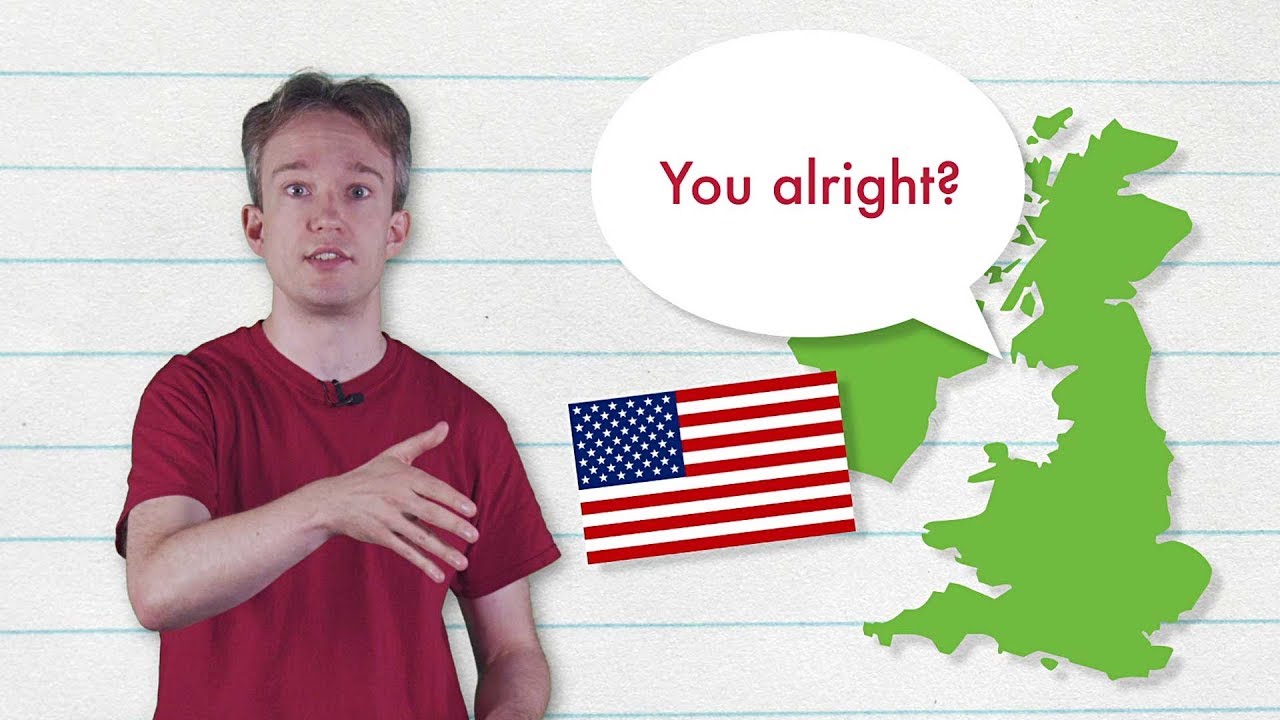
“Hello!” “Thank you!” “You’re welcome!” These are all phatic expressions, and people can argue about them. Pull down the description for the references! MORE LANGUAGE FILES: https://www.youtube.com/playlist?list=PL96C35uN7xGLDEnHuhD7CTZES3KXFnwm0
Written with Gretchen McCulloch and Molly Ruhl. Gretchen’s new book, BECAUSE INTERNET, is available now:
🇺🇸 US: https://amzn.to/30tLpjT
🇨🇦 CA: https://amzn.to/2JsTYWH
🇬🇧 UK: https://amzn.to/31K8eRD
(Those are affiliate links that give a commission to me or Gretchen, depending on country!)
Gretchen can be found at http://lingthusiasm.com/
REFERENCES:
Brown, P. and Levinson, S. 1987. Politeness: Some Universals in Language Usage. Cambridge. Cambridge University Press.
Goffman, Erving (1967): On Face-Work. An Analysis of Ritual Elements in Social Interaction. In: Ders.: Interaction Ritual. New York: Doubleday. 5-45.
Dinkin, A. (2018). It’s no problem to be polite: Apparent-time change in responses to thanks. Journal of Sociolinguistics, 22(2), 190-215.
Bucholtz, M. & Hall, K. (2005) Identity and interaction: A sociocultural linguistic approach. Discourse Studies. vol. 7 (4-2): 585-614.
Yngve, Victor. “On getting a word in edgewise,” page 568. Papers from the Sixth Regional Meeting [of the] Chicago Linguistic Society, 1970.
Sacks, H., Schegloff, E. A., & Jefferson, G. (1974). “A simplest systematics for the organization of turn-taking for conversation.” Language, 50, 696–735.
Tannen, D. (2012). Turn-Taking and Intercultural Discourse and Communication. In Bratt Paulston, C., Kiesling, S. F., & Rangel E. S., Japan/Anglo-American Cross-Cultural Communication (pp 135-157). Blackwell Handbooks in Linguistics: The Handbook of Intercultural Discourse and Communication.
🟥 MORE FROM TOM: https://www.tomscott.com/
(you can find contact details and social links there too)
📰 WEEKLY NEWSLETTER with good stuff from the rest of the internet: https://www.tomscott.com/newsletter/
❓ LATERAL, free weekly podcast: https://lateralcast.com/ https://youtube.com/lateralcast/
➕ TOM SCOTT PLUS: https://youtube.com/tomscottplus
👥 THE TECHNICAL DIFFICULTIES: https://youtube.com/techdif


@TomScottGo
November 11, 2025 at 12:03 pm
I've hedged my bets as best I can with the US/UK comparisons here: but your experiences may well be different! That's, uh, kind of the point.
@richamohunta8767
November 11, 2025 at 12:03 pm
thanks for the suggestion Tom. i shall now ask exactly what my friends mean when they wish me good morning 🙂
im such a good person
@jencontreras
November 11, 2025 at 12:03 pm
I hate phatic expressions, although I didn’t know they had a name. When I say something or hear something said I take it literally. It really irritates me when people say “How are you?” as they walk past barely making eye contact. Damn, why’d you ask if you didn’t want to hear the answer? “No problem” and “you’re welcome” mean two different things. If someone asks me if I’m alright, depending on their tone, I will either respond or think they think I’m crazy.
@AussieKim42
November 11, 2025 at 12:03 pm
Not the same, but being greeted in Brazil as an English speaker can often be a bit terrifying cos people barrel up and say “Oi!!” (meaning “hi!”) and I immediately flinch in fright (even if only inwardly) for a split second expecting something dreadful to happen next. 🤣
“Am I in trouble??!! Oh no. Oops. Oi!!!” 😳😩🫣🤭🤣
@Deathnotefan97
November 11, 2025 at 12:03 pm
I now have an idea for a fantasy race of bird people, who's phatic greeting is just a high pitched screech
Imagine 2 birds walking by each other, as they pass, one turns towards the other and screams, the other replies "you as well" and then both go about their day
@agent0422
November 11, 2025 at 12:03 pm
This video got rid of my disdain for small talk. Thank you for challenging my beliefs, Tom
@ImDemonAlchemist
November 11, 2025 at 12:03 pm
In the US, "howdy" does not sound formal
@LampGod0
November 11, 2025 at 12:03 pm
0:53 u can hear the next part of Tom’s script 😂
@gustavovillegas5909
November 11, 2025 at 12:03 pm
As a Californian I often say “for sure!” or “sure thing!” as a response to thank you
@Viktorrium
November 11, 2025 at 12:03 pm
I was once designing my own more consistent version of Latin and added logic to the word for "Hello" by turning it into a verb. Saying "Salve!" would literally mean "I command you to feel greeted."
@PurpleYoshiEgg
November 11, 2025 at 12:03 pm
Two people walking by each other at work.
Me: 'sup.
Another millenial: 'sup.
They move on with their days.
@erikmeltzer-rt7rh
November 11, 2025 at 12:03 pm
If you told them “good morning,” they would tend to look about, sniff the air, and reply that yes, it appeared to be a goodish morning now that you cared to mention it.
— Douglas Adams quoted from memory
@stefankrause5138
November 11, 2025 at 12:03 pm
In Germany we end a letter with "friendly regards", even if we are threatening to sue the recipient.
@GeddyRC
November 11, 2025 at 12:03 pm
I stopped saying "no problem" because it implies that whatever I was doing for someone wasn't a huge burden on my life, which is normally is. Now I say, "happy to help", reminding them that I have indeed helped them, I was happy to do so, but I want to make them fully aware that this registered as effort on my part.
Also, I no longer say "how's it going?", instead starting with "how goes it?" because it takes people by surprise and they seem to think more about it. Almost seemingly more appreciate to hear something out of the norm.
@strider4444
November 11, 2025 at 12:03 pm
I know this is not the point but Gandalf said that to make fun of Bilbo!
@TheBehm08
November 11, 2025 at 12:03 pm
You alright?
@sergl8878
November 11, 2025 at 12:03 pm
hmm so when tom asks someone from technical difficulties are they alright when they start laughing it’s a phatic expression.. i was wondering what he means by it…
@Godophugawa
November 11, 2025 at 12:03 pm
Why the hell is Ireland grouped under "Britian"???? 1:08
@enekaitzteixeira7010
November 11, 2025 at 12:03 pm
How T_F is "You're welcome!" rude. Makes no sense.
@peanut3438
November 11, 2025 at 12:03 pm
I finally understand why using both “no problem” and “you’re welcome” is awkward (unless I’m familiar with someone around my age then it’s automatically “no problem”)
@Camcolito
November 11, 2025 at 12:03 pm
If you're talking about Britain use a map of Britain and not Britain and Ireland.
@dbone3356
November 11, 2025 at 12:03 pm
Though, randomly asking someone "You alright?" Seems rude.
What do you mean? Why are you asking? What about me seems "not alright?" Just ask "How are you?"
Also, I never say "good morning" just "morning". Because it is.
@TheS3cretGamer
November 11, 2025 at 12:03 pm
I used “I’m alright” meaning “no thanks” in America and they were so confused….
@zumahyena
November 11, 2025 at 12:03 pm
"How are you?" is weird to me tbh. I'm used to 'Mornin' or 'Hello' but 'How's it going?' or 'How are you?' catches me off guard quite often.
@Monkeymario.
November 11, 2025 at 12:03 pm
From now on I will use "No problem" when talking to young children, and "You're welcome" when talking to the elderly.
@pandoratheclay
November 11, 2025 at 12:03 pm
“What’s good?”
@darkflux
November 11, 2025 at 12:03 pm
the Japanese "hai" which means "yes" or "affirmative" can also be used when the listener doesn't fully understand what in the world you are talking about. luckily, the inflection in how they say it makes it sound more like a question, so somewhat akin to "okaaaaaay…".
fun stuff.
@cicolas_nage
November 11, 2025 at 12:03 pm
i personally choose to not talk to anyone
@maksiksq
November 11, 2025 at 12:03 pm
The japanese example, そうだよ
@creativezaara7823
November 11, 2025 at 12:03 pm
Man this expression is phat!
@onetruetroy
November 11, 2025 at 12:03 pm
Excellent video that the YT algorithm decided to recommend after too many years. Preprogrammed responses are great for network communications but boring for humans. Spice it up!
—
How are you?
Enigmatic. Paradoxical. Extra medium. Mischievous. Verbose. Finely chopped.
—
Thank you!
My pleasure. I am thanked. I embrace your gratitude. You humble me. I’m glad. Great, now it’s your turn. Don’t thank me yet. That will be $5.
—
How’s it going?
Out the window. With constant acceleration. In the right direction. It’s going that way and I’m going this way.
—
What’s up?
The cost of living. My A1C. My height: new shoes. Ocean temperatures. Interest rates.
@CensoredMercy
November 11, 2025 at 12:03 pm
I say buddy often, something I picked up from older Canadians growing up and was seen as very friendly, but now my brain can’t really wrap around the fact that people find it passive aggressive, maybe the only example
@Anion-ConiferGilbert
November 11, 2025 at 12:03 pm
I have a friend who will consistently greet me with "salutations", to which I respond "good morning" regardless of the time of day. It's a little tradition of phatic expressions between the two of us (and anyone else we may be in conversation with).
@Nunya_Bidness_53
November 11, 2025 at 12:03 pm
Even in the U.S., "no problem" is a Northern expression, which falks strangely on Southern ears. It's a case of AMERICAN "understatement" for once.
@carterdelaney4648
November 11, 2025 at 12:03 pm
This is so interesting, I was just thinking about the “you’re welcome” thing this morning and wondering why I considered it impolite when it seems like a legitimate response to “thank you”
@danmacdonald8829
November 11, 2025 at 12:03 pm
No worries is borderline. No problem is rude.
@vismaykedilaya1318
November 11, 2025 at 12:03 pm
where i'm from (california), "are you alright" has been replaced by "you good?" as an expression of concern, at least among younger folks.
@MegaAstroFan18
November 11, 2025 at 12:03 pm
To be honest the only source I've ever seen for "no problem" not being phatic to older people and "you're welcome" not being phatic to younger people was some post on Twitter or something of two people really, really overanalyzing both terms and I don't even know if the interaction was a true disagreement. I'd take that with a grain of salt as a result, I know I certainly use both interchangeably, many people do. Anyone who IS making an issue out of either might just be trying to be difficult. Much like Gandalf in that opening, except without good intentions.
Comments are closed.