The Man Plays God System defaults to a myopic dystopia. How the innate tendency to eliminate the balance of everything living in service of man, has no humanity in the design. Our world of convenience is spiritually bankrupt. No matter where one casts a gaze our hand invades, destroys, neglects any larger System of life. We march as a Narcissistic Species to our synthetic end.
The problem with your argument with the carrot cake doesn't land because you can't definitively prove with 100% certainty that a chemical is completely non-harmful because of the limits of empirical testing. With empirical testing, you can only prove that it is harmful in some measure (positive results) or that it is unlikely to cause harm (negative results). I also want to emphasize the "s" in results for both, the only way that empirical testing can produce 100% without a doubt "yes" or "no" answers is if infinite tests were performed an infinite amount of times and all tests came up "yes" or "no" which is impossible because the hypothesis would have to be infinitely complex to include all the "yeses" and exclude all the "nos" otherwise a single contradiction will end the experiment with inconclusive results. There has to be a line that is crossed that 1. Ensures a reasonable chance the data is valid and 2. Ensures that the chances of someone being harmed is minimized.
The big benefit of hydroponics is that you can grow food in places without soil. It also gives you complete control over the nutrients and pathogens and everything else, while using less water (if you do it in an enclosed space) which means you can grow food in places that aren't normally capable of growing food. The main thing I agree with you is that it shouldn't be called organic. It is nothing even close to any sensible definition of organic.
Hydroponics is a lot older than the last two decades. That kind you're showing where they're using perfectly good land instead of putting the hydroponic farm in a tiny building, that's an atrocity. Build a 10 story building to do the hydroponics in and rewild all that land.
I live in Georgia, my grandparents in Alabama still grow a traditional garden and have blueberry bushes(?) they're taller than me so not sure if a bush or a tree. I can send you some fresh blueberries and tomatoes when they're ripe.
I don’t think I’ve tasted a real blueberry either. If the junk I’ve eaten from supermarkets is the real taste, I can’t see how they would ever be popular or desired. They are bland and kind of sour. Not the sweet and juicy description in old stories.
GROW your own greens 0:35 Pesticide & herbicide use in industrial food production is a significant & legitimate concern & problem! Our actual understanding of how these chemicals affect humans at different quantities and over decades is incomplete & fairly limited. And there are reasons for that…
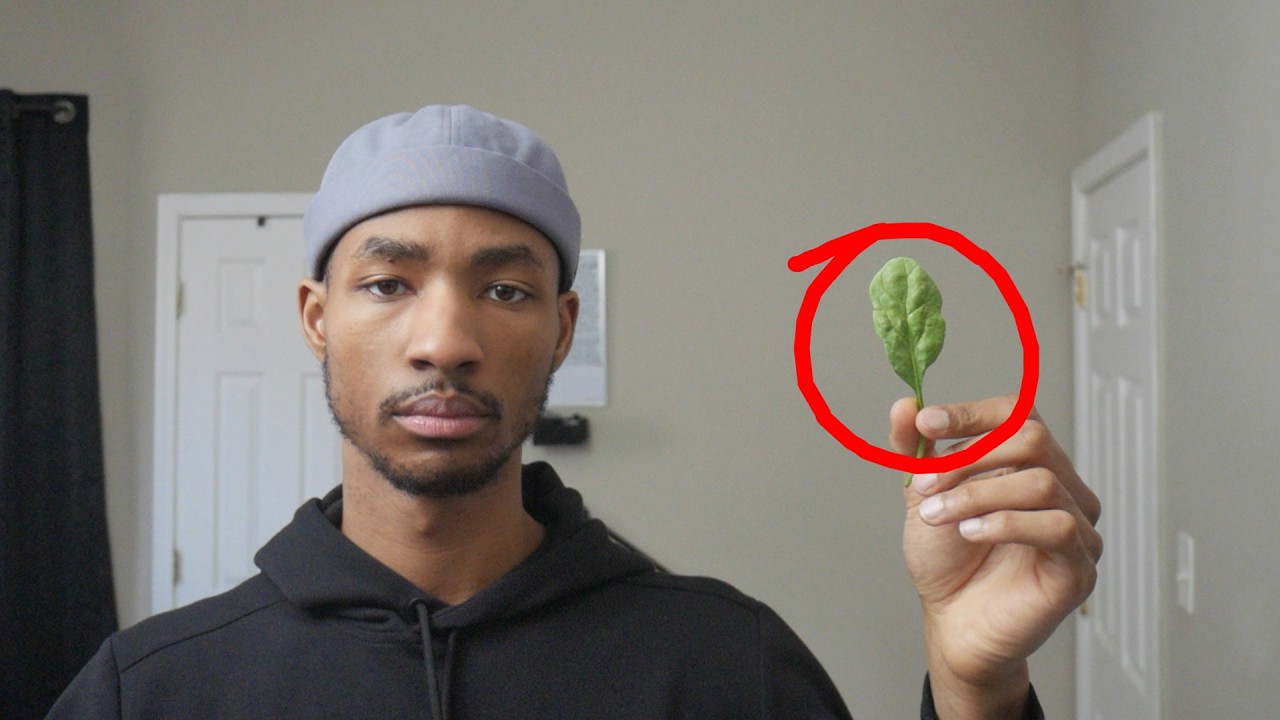
Greens, many much more nutrient dense than spinach, can be grown year tound indoors without a lot of work, attention or cost; and without any suspicious chemicals.
I am watching this while still lying down from feeling really nauseous all of a sudden after just two small forkfuls of spinach that I steamed. It is the organic pre-washed kind, but apparently I purchased poison. Thank you so much for this video. It could not be more timely and important.
So glad we buy 90% of our meat from a local rancher. We get eggs from our happy chickens. We get vegetables and berries from my deep mulch, organic garden.
My understanding is that, by weight, most (over 99%) of the pesticides within the human body are natural pesticides created by the plant itself. While this doesn't necessarily mean these plant-generated pesticides are harmful to us, it doesn't mean they aren't. Our Paleolithic ancestors had a diet consisting of between 0% and 20% plants (the rest meat). So I'd recommend following a similar diet if you want optimal health with only up to 20% of one's plate being plants (low carb, high-fiber plants). Maybe have fruit a few times a year (preferably during your most active time of the year, like in the summers when you're doing outdoor activity more). Truly though, one could easily go years without plants and have no adverse consequences as long as one's meat is fatty enough to provide energy.
ONE WORD, ORGANIC. Some of these are difficult to find in our area, peaches is one. We buy a lot of our organic fruits and vegetables at Costco, mostly, and occasionally organic farmer's markets, when we get by one. It is nice to support local growers, when you can, and that is usually the very freshest you can obtain, often picked that very day.
Thinking about this there should be some cross of this list with either the cheapest organic switches or easiest things to grow cheaply at home. Even an empty chobani tub can grow a dwarf cherry tomato on a balcony or lettuce in a south facing window. Potatoes can easily grow in 5 gallon buckets with organic nutrients. Unfortunately, most people don’t have the space for fruit trees or grapes and growing those organically is a challenge without significant investment of at least time so most of the list for growing would be significantly different.
I've noticed the Dirty Dozen list always seems to be the most nutrient-dense fruits and vegetables at the top, with the most antioxidants that are otherwise among the healthiest foods without pesticides/herbicides, etc…
Mass produced food should have strong non chemical grows. There is no reason why one cannot make a profit growing food correctly especially when you buy up tons and tons of acres, farms, and political seats.
I grow veg starts commercially but don’t bother with getting certified organic. Such a racket but I use no chemicals. My customers know, that’s all I care about. From WA!
it's interesting how we can't actually digest most plants raw. it's almost like it's not something we can eat naturally. so glad we can brute force it with cooking. otherwise Vegan would be literally impossible
For the record. No one would be harmed by not buying the dirty dozen. 10 of them are full of sugar/starch and should only ever be as the occasional treat. Unless you like spiking insulin. Spinach/Kale are fine and even healthy in moderation, so long as you wash them thoroughly and/or get organic. But even organic veggies aren't all equal. Those grown with hydroponics are lacking a ton of their nutrients as they only put a select few into the water, and as you mentioned, they're grown in plastic. As for the microbes, mycellium is also incredibly important and helps the soil retain moisture as well as working as a web to spread nutrients through root systems. There's more to it, but there's just so much going on in healthy dirt, and the factory farms just kill it all off. That's why their farms end up depleting the soil and getting really dusty. No ground cover, and stripped soil that just floats away in the wind.
Fun fact: Dandelions help raise nutrient levels in the soil because their roots go deeper and can cut through harder dirt, which allows them to pull up the nutrients so the other plants can access them (really helpful when it comes to people growing where there's lots of clay.
I grow produce regeneratively on my home property in the city. There is absolutely ZERO substitute for good healthy biologically active soil. The produce tastes better. You know why? Because the photochemistry of the plant is more complete and complex due to the healthy soil. Worms, bacteria, fungus, isopods, beetle and larvae, and larger animals and their refuse ALL create an environment where the plants can extracts more complete nutrients from the soil. This is how God designed it(or how nature is structured). Anything else is fake!
Also @NoLabCoatRequired, PESTicides are used to control insects and other pests. HERBicides are used to control weeds. They get easily confused 😵💫. No worries!
I remember playing a spaceship version of the game Clue growing up, where the 'conservatory' was a hydroponics lab. It's always stuck with me as a sci-fi way to have fresh vegetables in space.
Did y'all see Josh Johnson's set on having a blueberry in Australia 😂 until I saw this video I thought he was exaggerating about never having tasted a real blueberry before. We get ours from the bushes at a friend's house.
b.s. enviro policy + mgmt, m.s. enviro law and policy, focus in climate change policy from the best enviro law school in the country, permaculture design cert, and I've read and studied soil and all relevant science for a long time for fun, and put all of this into practice.
All of my education brought me to the soil. Agroforestry permaculture is the way, and it needs to be done with polyculture driving it. Monoculture requires inputs. Even that blueberry farm, while on the right path, could do more. I see opportunity just in that short video you showed. I see no mulch. I see JUST blueberries. That's not sustainable. I see no water management. Not sustainable. We need to work the land, so that we manage the water. We need polyculture to rebuild the soil so that it holds more moisture. Blueberries alone cannot sustain themselves nor the soil.
Monoculture and poor agricultural practices have been ending the largest and smallest civilizations on earth since we started farming 10,000 years ago. See; 'Dirt: The Erosion of Civilizations,' by David Montgomery. I also recommend you (people) read some books on the Dust Bowl because we are fast approaching global dust bowls on steroids if we are not careful, RIGHT NOW.
Foraging was part of our nature for 99.99% of our existence, eating primarily vegetables and plant matter. I tell people this all the time. I am a gardener by trade, but am growing native edible plants, rebuilding soil and wildlife in the process.
We have 100-150 years of topsoil left. We all have a responsibility to take action. It cannot be done for us. There are so many of us that our individual actions will make a massive difference. This is where you can exert control over your health.
Mental, physical, environmental, and social health can be focused on at the same time through permaculture design and living. We can create hyper-local economies that rebuild our environment, giving back to us in the process in a variety of ways.
In the late 1800s, 95% of US citizens were farmers, or connected to them in a variety of ways. they were the center of everything. We can and should move in that direction.
I think this as much as an economics problem as it is an industry problem. More and more people are choosing to buy the cheapest food possible because they cannot afford/access anything better. This encourages the practice, because those same people are buying their food from places like walmart who puts pressure on the supply chain to drive down price at all costs. Everything we buy has planned obsolence built into it, everything we interact with has some kind of subscription, everything is subsidized by the advertising industry (ironically what makes things cheaper/"free" is what also jacks up the cost of everything else). The world has always been a money game, but I think that money game is nearing final stages. Sorry for the doom and gloom, but I don't see things improving, we need the whole system to collapse and rebuild if we want to move forward in society.
Johnny, EWG is a net good. They keep the topic of pesticides on produce in front of the public. EWG suggests that it is better to buy and eat organic versions of those dirty dozen items, if you can afford them. For clean 15, it is much less important to buy organic. Conventionally grown have lower levels of pesticides. It is still important for people to eat produce. Vegetables and fruits, even if laden with pesticides, have vitamins, minerals, and a host of beneficial chemical compounds our bodies need. the skins and peels of produce have some of the most important compounds, so I like to eat them and when they have not been sprayed with pesticides. Accessible means in the store and at an acceptable price. The saddest part is that they are only looking at fruits and vegetables. That is OK for me because I can't eat high carb foods. People who eat conventionally grown grains and products made from them, are getting slammed with glyphosate (Round-up) every day.
Once you pick your own strawberries (pink all the way through) you will never buy a store bought strawberry again. They should not be white in the middle or they are not actually fully ripe.
It’s usually cheaper & more cost effective to pick your own if you have it available in your area.
No spray for soft skinned fruits (Raspberries, Strawberries, Blackberries & their derivatives) because the pesticides can seep through the skin. Whereas as things like Blueberries & Plums have a tough exterior that makes it harder for chemicals to penetrate & easier to clean off the residue.
For me, after I saw the report about chemicals going deep into the flesh for apples, I won’t eat apples that are sprayed anymore. The study showed that it’s not enough to peel the apple’s skin.
Farmers Markets are the best places to buy fresh groceries, but you have to talk to them about how stuff is grown or the animals are cared for.
In Portland, OR, it’s very easy to find organic OR biodynamically grown food. You can get animals raised humanely & actually go visit the farmers/ranchers to see if they do things right. However, in the DC Metro area, it’s very hard to find non-conventionally grown fruits and vegetables at Farmers Markets. Meats are usually easier to find.
The packaged produce in our area comes from the Salinas, Santa Cruz and Monterey area. They have organic produce. There was a battery plant fire there a little while back. It was reported that toxic chemicals were released and could be in the soil. I've avoided these products. Do you have any info on the safety of the produce grown in the area?
Vertical Hydroponics isn’t that bad as it’s an option for places that don’t have land to grow. The issue is that the taste isn’t the same. The “tirroir” aka the minerals in the soil, is what gives the flavor to stuff grown in the ground.
Now what you are showing where they have the land doesn’t really make sense to me.



@ruthrodgers2878
April 15, 2026 at 1:43 am
The Man Plays God System defaults to a myopic dystopia. How the innate tendency to eliminate the balance of everything living in service of man, has no humanity in the design. Our world of convenience is spiritually bankrupt. No matter where one casts a gaze our hand invades, destroys, neglects any larger System of life. We march as a Narcissistic Species to our synthetic end.
@karenmitchell4561
April 15, 2026 at 1:43 am
Nice voice, great attitude, TOO MANY WORDS. Cut it down to
about 40 minutes!
@Dovenchiko
April 15, 2026 at 1:43 am
The problem with your argument with the carrot cake doesn't land because you can't definitively prove with 100% certainty that a chemical is completely non-harmful because of the limits of empirical testing. With empirical testing, you can only prove that it is harmful in some measure (positive results) or that it is unlikely to cause harm (negative results). I also want to emphasize the "s" in results for both, the only way that empirical testing can produce 100% without a doubt "yes" or "no" answers is if infinite tests were performed an infinite amount of times and all tests came up "yes" or "no" which is impossible because the hypothesis would have to be infinitely complex to include all the "yeses" and exclude all the "nos" otherwise a single contradiction will end the experiment with inconclusive results. There has to be a line that is crossed that 1. Ensures a reasonable chance the data is valid and 2. Ensures that the chances of someone being harmed is minimized.
@Unsensitive
April 15, 2026 at 1:43 am
I'm concerned with the result.
Same nutrients means same chemistry.
The issue is we don't know what we don't know.
I don't think we understand enough about the subtleties of plant nutrition.
We think we know it, and we know a lot.. but not all.
@bramvanduijn8086
April 15, 2026 at 1:43 am
The big benefit of hydroponics is that you can grow food in places without soil. It also gives you complete control over the nutrients and pathogens and everything else, while using less water (if you do it in an enclosed space) which means you can grow food in places that aren't normally capable of growing food. The main thing I agree with you is that it shouldn't be called organic. It is nothing even close to any sensible definition of organic.
Hydroponics is a lot older than the last two decades. That kind you're showing where they're using perfectly good land instead of putting the hydroponic farm in a tiny building, that's an atrocity. Build a 10 story building to do the hydroponics in and rewild all that land.
@gabrielle4117
April 15, 2026 at 1:43 am
Smh I missed this live 😢
@gabrielle4117
April 15, 2026 at 1:43 am
Fake plants information caught me for a spin 😮
@2565578122
April 15, 2026 at 1:43 am
I live in Georgia, my grandparents in Alabama still grow a traditional garden and have blueberry bushes(?) they're taller than me so not sure if a bush or a tree. I can send you some fresh blueberries and tomatoes when they're ripe.
@SunKissedPeach
April 15, 2026 at 1:43 am
If the EWG is a 501c3 then by law there's some stuff that they can't speak out about
@SunKissedPeach
April 15, 2026 at 1:43 am
Altho this is not revelent to us as Cappybaras i find this fascinating!!!
1:01
@GregorioVazquezJr
April 15, 2026 at 1:43 am
I don’t think I’ve tasted a real blueberry either. If the junk I’ve eaten from supermarkets is the real taste, I can’t see how they would ever be popular or desired. They are bland and kind of sour. Not the sweet and juicy description in old stories.
@steph0412anie
April 15, 2026 at 1:43 am
The reason for buying certified organic
@dplj4428
April 15, 2026 at 1:43 am
1:38 EWG
@Pittcrew1034
April 15, 2026 at 1:43 am
Great idea for a stream
@DJJonPattrsn22
April 15, 2026 at 1:43 am
GROW your own greens
0:35 Pesticide & herbicide use in industrial food production is a significant & legitimate concern & problem!
Our actual understanding of how these chemicals affect humans at different quantities and over decades is incomplete & fairly limited. And there are reasons for that…
Greens, many much more nutrient dense than spinach, can be grown year tound indoors without a lot of work, attention or cost; and without any suspicious chemicals.
@jakevendrotti1496
April 15, 2026 at 1:43 am
I am watching this while still lying down from feeling really nauseous all of a sudden after just two small forkfuls of spinach that I steamed. It is the organic pre-washed kind, but apparently I purchased poison. Thank you so much for this video. It could not be more timely and important.
@ChrisIsTasha
April 15, 2026 at 1:43 am
Herbicides are for weeds. Pesticides are for bugs.
@midwestribeye7820
April 15, 2026 at 1:43 am
So glad we buy 90% of our meat from a local rancher. We get eggs from our happy chickens. We get vegetables and berries from my deep mulch, organic garden.
@Kathleen67.
April 15, 2026 at 1:43 am
Excellent video! Run with it! You're doing a great job. Food needs to be grown the way nature inteneded in order to have health.
@rhondasmith7413
April 15, 2026 at 1:43 am
1:12:54 How hideous! 😢
@felisgorgeouscatus
April 15, 2026 at 1:43 am
Why are people still eating spinach anyway? With all the oxalates causing arthritus in them, they aren't as good for us as Popeye said.
@annegrohs6181
April 15, 2026 at 1:43 am
My understanding is that, by weight, most (over 99%) of the pesticides within the human body are natural pesticides created by the plant itself. While this doesn't necessarily mean these plant-generated pesticides are harmful to us, it doesn't mean they aren't. Our Paleolithic ancestors had a diet consisting of between 0% and 20% plants (the rest meat). So I'd recommend following a similar diet if you want optimal health with only up to 20% of one's plate being plants (low carb, high-fiber plants). Maybe have fruit a few times a year (preferably during your most active time of the year, like in the summers when you're doing outdoor activity more). Truly though, one could easily go years without plants and have no adverse consequences as long as one's meat is fatty enough to provide energy.
@MrJdsenior
April 15, 2026 at 1:43 am
ONE WORD, ORGANIC. Some of these are difficult to find in our area, peaches is one. We buy a lot of our organic fruits and vegetables at Costco, mostly, and occasionally organic farmer's markets, when we get by one. It is nice to support local growers, when you can, and that is usually the very freshest you can obtain, often picked that very day.
@HeBe2Beefd
April 15, 2026 at 1:43 am
Thinking about this there should be some cross of this list with either the cheapest organic switches or easiest things to grow cheaply at home. Even an empty chobani tub can grow a dwarf cherry tomato on a balcony or lettuce in a south facing window. Potatoes can easily grow in 5 gallon buckets with organic nutrients. Unfortunately, most people don’t have the space for fruit trees or grapes and growing those organically is a challenge without significant investment of at least time so most of the list for growing would be significantly different.
@Chelcedony
April 15, 2026 at 1:43 am
I've noticed the Dirty Dozen list always seems to be the most nutrient-dense fruits and vegetables at the top, with the most antioxidants that are otherwise among the healthiest foods without pesticides/herbicides, etc…
@Twana123O
April 15, 2026 at 1:43 am
Sometimes today organic doesn't mean a thing except a higher price, like bill gates "apeel."
@SerialSkull
April 15, 2026 at 1:43 am
Mass produced food should have strong non chemical grows. There is no reason why one cannot make a profit growing food correctly especially when you buy up tons and tons of acres, farms, and political seats.
@PhilippeCaekelberghs
April 15, 2026 at 1:43 am
So spinach not only tops the list of oxalates but also the list of pesticides 🎉
@theCLDavis
April 15, 2026 at 1:43 am
I grow veg starts commercially but don’t bother with getting certified organic. Such a racket but I use no chemicals. My customers know, that’s all I care about. From WA!
@SimGunther
April 15, 2026 at 1:43 am
Remember, NoLabCoatsRequired didn't have a heaping of Dicamba in his system for exposing the pesticides
@MaxContagion
April 15, 2026 at 1:43 am
it's interesting how we can't actually digest most plants raw. it's almost like it's not something we can eat naturally. so glad we can brute force it with cooking. otherwise Vegan would be literally impossible
@CoreInterrupt
April 15, 2026 at 1:43 am
For the record. No one would be harmed by not buying the dirty dozen. 10 of them are full of sugar/starch and should only ever be as the occasional treat. Unless you like spiking insulin. Spinach/Kale are fine and even healthy in moderation, so long as you wash them thoroughly and/or get organic. But even organic veggies aren't all equal. Those grown with hydroponics are lacking a ton of their nutrients as they only put a select few into the water, and as you mentioned, they're grown in plastic. As for the microbes, mycellium is also incredibly important and helps the soil retain moisture as well as working as a web to spread nutrients through root systems. There's more to it, but there's just so much going on in healthy dirt, and the factory farms just kill it all off. That's why their farms end up depleting the soil and getting really dusty. No ground cover, and stripped soil that just floats away in the wind.
Fun fact: Dandelions help raise nutrient levels in the soil because their roots go deeper and can cut through harder dirt, which allows them to pull up the nutrients so the other plants can access them (really helpful when it comes to people growing where there's lots of clay.
@codacoda565
April 15, 2026 at 1:43 am
I just grow watercrest and some other vegetables in the soil. And I just eat it plain
@the1plantguy
April 15, 2026 at 1:43 am
I grow produce regeneratively on my home property in the city. There is absolutely ZERO substitute for good healthy biologically active soil. The produce tastes better. You know why? Because the photochemistry of the plant is more complete and complex due to the healthy soil. Worms, bacteria, fungus, isopods, beetle and larvae, and larger animals and their refuse ALL create an environment where the plants can extracts more complete nutrients from the soil. This is how God designed it(or how nature is structured). Anything else is fake!
Also @NoLabCoatRequired, PESTicides are used to control insects and other pests. HERBicides are used to control weeds. They get easily confused 😵💫. No worries!
@jabneel7
April 15, 2026 at 1:43 am
We now have to pray for God to protect us from our food. Amen
@dorisenderle5857
April 15, 2026 at 1:43 am
Pennsylvania here.
@Kyermemehtar
April 15, 2026 at 1:43 am
I remember playing a spaceship version of the game Clue growing up, where the 'conservatory' was a hydroponics lab. It's always stuck with me as a sci-fi way to have fresh vegetables in space.
Did y'all see Josh Johnson's set on having a blueberry in Australia 😂 until I saw this video I thought he was exaggerating about never having tasted a real blueberry before. We get ours from the bushes at a friend's house.
@Amor_Fati_17
April 15, 2026 at 1:43 am
b.s. enviro policy + mgmt, m.s. enviro law and policy, focus in climate change policy from the best enviro law school in the country, permaculture design cert, and I've read and studied soil and all relevant science for a long time for fun, and put all of this into practice.
All of my education brought me to the soil. Agroforestry permaculture is the way, and it needs to be done with polyculture driving it. Monoculture requires inputs. Even that blueberry farm, while on the right path, could do more. I see opportunity just in that short video you showed. I see no mulch. I see JUST blueberries. That's not sustainable. I see no water management. Not sustainable. We need to work the land, so that we manage the water. We need polyculture to rebuild the soil so that it holds more moisture. Blueberries alone cannot sustain themselves nor the soil.
Monoculture and poor agricultural practices have been ending the largest and smallest civilizations on earth since we started farming 10,000 years ago. See; 'Dirt: The Erosion of Civilizations,' by David Montgomery. I also recommend you (people) read some books on the Dust Bowl because we are fast approaching global dust bowls on steroids if we are not careful, RIGHT NOW.
Foraging was part of our nature for 99.99% of our existence, eating primarily vegetables and plant matter. I tell people this all the time. I am a gardener by trade, but am growing native edible plants, rebuilding soil and wildlife in the process.
We have 100-150 years of topsoil left. We all have a responsibility to take action. It cannot be done for us. There are so many of us that our individual actions will make a massive difference. This is where you can exert control over your health.
Mental, physical, environmental, and social health can be focused on at the same time through permaculture design and living. We can create hyper-local economies that rebuild our environment, giving back to us in the process in a variety of ways.
In the late 1800s, 95% of US citizens were farmers, or connected to them in a variety of ways. they were the center of everything. We can and should move in that direction.
@GodLikeMikeLive
April 15, 2026 at 1:43 am
Interesting that the fruits and vegetables that are consumed the most are the most poisoned 🤔
@beckybrown3291
April 15, 2026 at 1:43 am
Spinach growers simply don't donate enough to their research.
@hiddenlawyer
April 15, 2026 at 1:43 am
I think this as much as an economics problem as it is an industry problem. More and more people are choosing to buy the cheapest food possible because they cannot afford/access anything better. This encourages the practice, because those same people are buying their food from places like walmart who puts pressure on the supply chain to drive down price at all costs. Everything we buy has planned obsolence built into it, everything we interact with has some kind of subscription, everything is subsidized by the advertising industry (ironically what makes things cheaper/"free" is what also jacks up the cost of everything else). The world has always been a money game, but I think that money game is nearing final stages. Sorry for the doom and gloom, but I don't see things improving, we need the whole system to collapse and rebuild if we want to move forward in society.
@ovenbird50
April 15, 2026 at 1:43 am
Johnny, EWG is a net good. They keep the topic of pesticides on produce in front of the public. EWG suggests that it is better to buy and eat organic versions of those dirty dozen items, if you can afford them.
For clean 15, it is much less important to buy organic. Conventionally grown have lower levels of pesticides.
It is still important for people to eat produce. Vegetables and fruits, even if laden with pesticides, have vitamins, minerals, and a host of beneficial chemical compounds our bodies need.
the skins and peels of produce have some of the most important compounds, so I like to eat them and when they have not been sprayed with pesticides.
Accessible means in the store and at an acceptable price.
The saddest part is that they are only looking at fruits and vegetables. That is OK for me because I can't eat high carb foods. People who eat conventionally grown grains and products made from them, are getting slammed with glyphosate (Round-up) every day.
@dexterdrake1734
April 15, 2026 at 1:43 am
Do you have any sources on hydroponic crops tasting worse than soil crops?
@wanderingcelle
April 15, 2026 at 1:43 am
Once you pick your own strawberries (pink all the way through) you will never buy a store bought strawberry again. They should not be white in the middle or they are not actually fully ripe.
It’s usually cheaper & more cost effective to pick your own if you have it available in your area.
No spray for soft skinned fruits (Raspberries, Strawberries, Blackberries & their derivatives) because the pesticides can seep through the skin. Whereas as things like Blueberries & Plums have a tough exterior that makes it harder for chemicals to penetrate & easier to clean off the residue.
For me, after I saw the report about chemicals going deep into the flesh for apples, I won’t eat apples that are sprayed anymore. The study showed that it’s not enough to peel the apple’s skin.
@wanderingcelle
April 15, 2026 at 1:43 am
Farmers Markets are the best places to buy fresh groceries, but you have to talk to them about how stuff is grown or the animals are cared for.
In Portland, OR, it’s very easy to find organic OR biodynamically grown food. You can get animals raised humanely & actually go visit the farmers/ranchers to see if they do things right. However, in the DC Metro area, it’s very hard to find non-conventionally grown fruits and vegetables at Farmers Markets. Meats are usually easier to find.
@MVbailegardens
April 15, 2026 at 1:43 am
The packaged produce in our area comes from the Salinas, Santa Cruz and Monterey area. They have organic produce. There was a battery plant fire there a little while back. It was reported that toxic chemicals were released and could be in the soil.
I've avoided these products. Do you have any info on the safety of the produce grown in the area?
@olilitheartistandchildofearth
April 15, 2026 at 1:43 am
why do I always miss the livestream
@wanderingcelle
April 15, 2026 at 1:43 am
Vertical Hydroponics isn’t that bad as it’s an option for places that don’t have land to grow. The issue is that the taste isn’t the same. The “tirroir” aka the minerals in the soil, is what gives the flavor to stuff grown in the ground.
Now what you are showing where they have the land doesn’t really make sense to me.