
Drug Addiction Is a Learning Disorder, says Maia Szalavitz | Big Think
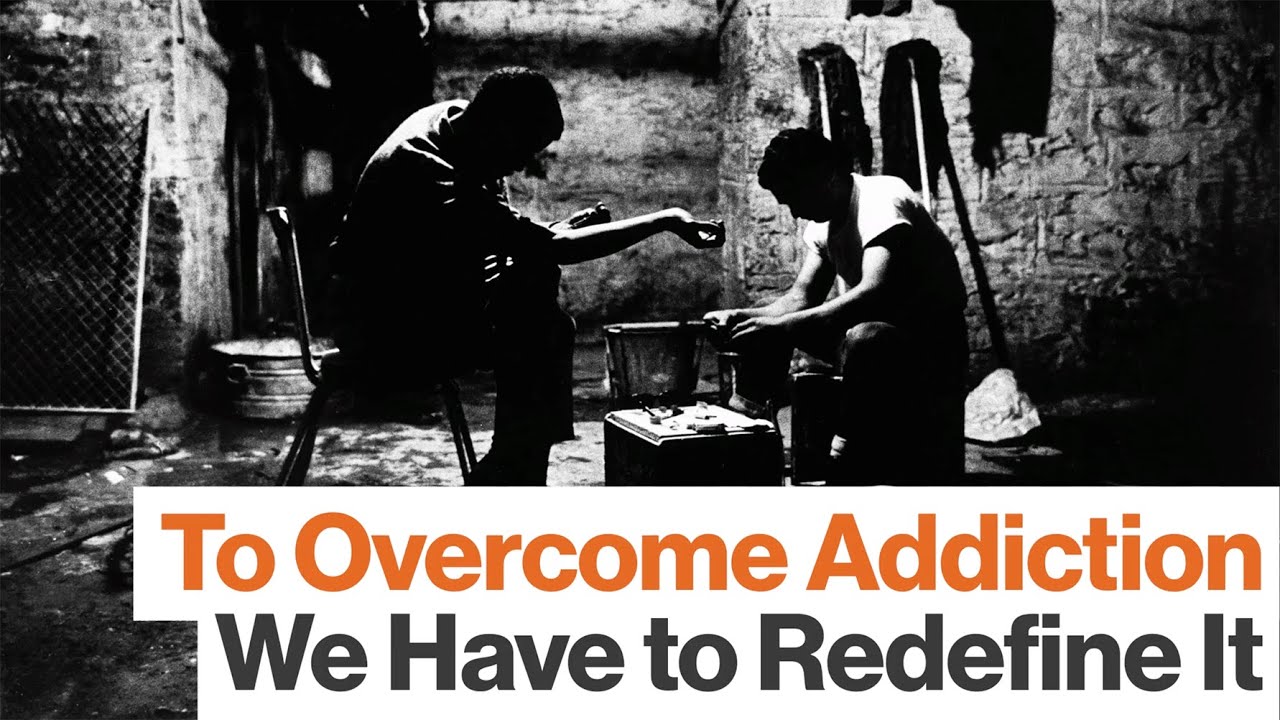
Drug Addiction Is a Learning Disorder,
New videos DAILY: https://bigth.ink
Join Big Think Edge for exclusive video lessons from top thinkers and doers: https://bigth.ink/Edge
———————————————————————————-
Author and neuroscience journalist Maia Szalavitz says that your brain doesn’t necessarily choose to become addicted to gambling. Rather, it just really wants to figure out a pattern. This ‘want’ doesn’t need any foreign chemicals in order to make it work. In the mind of a serious gambler, their brain wants to find order in the game’s structure so bad that it will keep the person playing, telling itself that it will figure it out and that it’s just one step away from becoming rich. This doesn’t happen to everyone — on the contrary, addictive gamblers are a small yet potent percentage of all gamblers — but their brains mimic that of a severe drug addict trying to get their next fix. Maia’s latest book is Unbroken Brain: A Revolutionary New Way of Understanding Addiction.
———————————————————————————-
MAIA SZALAVITZ:
Maia Szalavitz is widely viewed as one of the premier American journalists covering addiction and drugs. A neuroscience writer for TIME.com and a former cocaine and heroin addict, she understands the science and its personal dimensions in a way that few others can. is the first book-length exposé of the “tough love” business that dominates addiction treatment. Her newest book is Unbroken Brain: A Revolutionary New Way of Understanding Addiction.
———————————————————————————-
FOLLOW BIG THINK:
📰BigThink.com: https://bigth.ink
🧔Facebook: https://bigth.ink/facebook
🐦Twitter: https://bigth.ink/twitter
📸Instagram: https://bigth.ink/Instragram
📹YouTube: https://bigth.ink/youtube
✉ E-mail: info@bigthink.com
———————————————————————————-
TRANSCRIPT:
Maia Szalavitz: Addiction is: compulsive behavior despite negative consequences.
And it’s really important to start by defining addiction because for a long time we really defined it very poorly.
We used to think that addiction was “needing a substance to function”.
And what that resulted in was that cocaine was “not addictive” because cocaine does not produce physical withdrawal that is noticeable. You may be cranky and irritable and crave cocaine, but you won’t be puking and shaking and have the classic symptoms that you would see with alcohol or heroin withdrawal. So cocaine wasn’t addictive.
Then crack came, and we realized that defining addiction in that way not only harms people by telling them that cocaine is not addictive, it also harmed pain patients because people who take opioids daily for pain will develop physical dependence, but they are not addicted unless they have compulsive behavior despite negative consequences.
To me, non-drug addictions are really, really interesting because some people have argued that drugs are addictive because they change the brain and that addiction results from unique pathology related to the particular chemicals of the drugs.
It is certainly the case that the chemistry matters, but addiction can occur completely without any external chemicals.
And the reason that that happens is that addiction is not simply exposure to a substance, addiction is a pattern of behavior, and certain patterns of experience are inherently addictive.
And gambling is a good example of this because what gambling does is it gives you intermittent reinforcement. And so every unpredictable amount of times, you win.
And this is a puzzle to our pattern-seeking brains, and we keep thinking we’re going to find a pattern and it’s going to sort out and we’re going to understand it, and we’re going to get rich. Or we find that sort of the constant immersion in these ideas that allow you to escape: “Well I’ve got to do—this is going to soothe you and allow you to escape from your life,” and stuff like this.
I think gambling is also really interesting because we’ve had an enormous explosion in the availability of gambling, but we have not had an enormous explosion of gambling addictions. ‘
And again, this is because the population rate— there’s only a certain percent of people who will be vulnerable.
Now, you can make more of those people by traumatizing them and taking away their economic ways of living, but you can’t create them by providing more substances or more addictive opportunities.


@nottheshaman2
September 28, 2025 at 12:28 am
Wa absolutely CANNOT make better drugs. Anytime man touches medicine they corrupt it. Man's chemicals will never be your cure..
@nottheshaman2
September 28, 2025 at 12:28 am
"If you want to change your life, YOU have to change something. " – Not The Shaman
@nottheshaman2
September 28, 2025 at 12:28 am
I have said this before. Psychedelics are a catalyst, your CHANGE is the cure. 🙏🙏🙏
@jessicamichalofsky4978
September 28, 2025 at 12:28 am
Thank you for this wise, calm, and rational discussion. My son died from fentanyl and benzos. Typically, he took meth, which for him, helped to overcome depression, loneliness, and gave him energy and intensity. He was a student, and I believe he thought meth helped him with long hours of writing essays. I don't think it helped him. I saw some of the papers he wrote. They were super intense but bizarrely repetitive. But the point that I am making is that, as far as I know, none of his addiction treatment team ever inquired WHY he was using drugs or WHAT purpose they served him. He didn't die from meth, though it did wreck his life. He died because he stopped breathing, a result of the fentanyl and benzos that was either in the meth or the drugs he took to come down off of meth. ALL drugs he was taking were GARBAGE, made in vats in basement by criminals. And yet, It makes me even sadder to see what a blunt and harmful instrument most addiction treatment is. My son felt shamed and belittled and ultimately chose street drugs to the free methadone he was receiving because it came with so many rules and punishments and shaming, and he lived 50km away from a pharmacy. He was only 25 years old when he died–in my opinion, a completely preventable death.
@ShaneGang236
September 28, 2025 at 12:28 am
👇🏾Like if your here for school ?
@madeinandhra12-rk5mw
September 28, 2025 at 12:28 am
Want a wonderful way to look at the problem of addictions
@brittaolson6550
September 28, 2025 at 12:28 am
I like the Szalavitz’s explanation of the process of addressing an existing addiction:
-Identifying the survival crisis
-Figuring out why you are using drugs to fix the problem (“What purpose is the addiction serving?” ~Szalavitz)
AND
-Eliminating the need for drugs, in solving the problem. (Address in the underlying issues leading to use, by means of non-chemical solutions).
Asking, “What is the survival crisis?” Is so much more helpful than, “What is your problem?” or, “What’s wrong with you?”
@Spacecowboy42
September 28, 2025 at 12:28 am
Shes saying exactly what jerry Garcia said years ago
@Blackpilld
September 28, 2025 at 12:28 am
An ex opiate user who speaks about addiction. I’m tuned!
@PutTheShovelDown
September 28, 2025 at 12:28 am
Great video. I completely agree. It's really hard to get people to rethink addiction. It's a complex topic with no simple answers.
@TravisGlass1974
September 28, 2025 at 12:28 am
I really like Maia Szalavitz’s books. I don’t read tons of books, but I have read three that she authored or co-authored. However, at the end when she talks about newer drugs with less risk “soma’’ from Brave New World came to mind. The perfect drug is blissful but a little creepy.
@luciusveritas9870
September 28, 2025 at 12:28 am
empowering. <3
@peachesncream67
September 28, 2025 at 12:28 am
um… yeah… I hear you on some of that…but yeah…NO!!! Do not agree re; better drugs being the solution????
@gladwin27
September 28, 2025 at 12:28 am
https://www.youtube.com/watch?v=DsdghV2xS4I
@laquiviahand8077
September 28, 2025 at 12:28 am
Wow..learning something new.
@cielarko6210
September 28, 2025 at 12:28 am
I've heard that tea from a plant named Iboga makes you pose these questions
@roberttunstall9905
September 28, 2025 at 12:28 am
"The future of drugs is better drugs." lol An addict will abuse anything and everything possible. The future is lack of need for drugs.
@aprylkarynjewelry
September 28, 2025 at 12:28 am
Fantastic! Finally. The most useful explanation of addiction. Learned helplessness is the biggest problem with current treatment for people who struggle with pleasure seeking through compulsive behavior. When people are constantly told they have a disease, which is irrational, it takes away the need to change. Addiction is learned and it can be unlearned. The brain is either a prison, or a frontier.
@geddit5149
September 28, 2025 at 12:28 am
This is a load of complete shite. No way are you going to put the complexities of addiction into a nice neat little box called 'learning disorder" so you can feel better about yourself or publish a paper. You have no empathy if you believe the source of addiction starts with a learning disorder.
@ecotonoirrelevante246
September 28, 2025 at 12:28 am
So useless. So we're fucked until someone creates the perfect drug.
@MrJDSettle
September 28, 2025 at 12:28 am
Soooo, drug addicts are stupid? STOP THE PRESSES!!!
@classygary
September 28, 2025 at 12:28 am
She contradicts herself left and right while stating some truths … then makes preposterous proposals … equal to the Chinese brain burning remedy … a complete ass hat if you wanna no the truth .
@gradingterminal807
September 28, 2025 at 12:28 am
hahaha.
… no nego my heritage… babies born in cotton n cloud cradled… mad max … i want yo b special e ability too…
funnny u bring up heroine.
. im phobic since generations… 2 msybe
.. but… thoughts arrive like butterfly effect…
@unknownfakename
September 28, 2025 at 12:28 am
The answer was and always is weed my friend
@NymphetaminexXxGrrrl
September 28, 2025 at 12:28 am
What she is discussing about dependence vs. addiction, is what i have always called physical addiction vs. psychological addiction. I thought this was already understood in the general population? Heroin may be physically addictive, while crack-cocaine is psychologically addictive. Of course there can be a combined effect. A heroin addict who has successfully detoxed, is no longer physically dependant can still suffer a psychological addiction that can lead to a relapse years down the road.
@LukaLegend77
September 28, 2025 at 12:28 am
Psychedelics definitely help more than no psychedelics at all, you should have noted that clearly.
@franklinnash
September 28, 2025 at 12:28 am
Interesting and insightful.
@newcheese8554
September 28, 2025 at 12:28 am
I was addicted to soap, but im clean now
@jiffjiffernson7292
September 28, 2025 at 12:28 am
This person's premise of pain is false. Her thinking and conclusion is as well. Pain for instance, is cortically integrated as are all human pain interpretations. There is no binary interpretation. You can't say you will be cranky and craving and shaking but not puking therefore the connection is not physical. The experience of long term pain can be sensitization or 'Centralized Pain' and can evidenced across all pain spectrums. The longer pain is experienced by the brain the less likely the brain will be to resolve the pain – and the more incomplete the resolution will be. This includes pain via electrical modulation as well. It can result in a long term glial cell inflammatory process and breakdown of the dorsal horn, peripherally. With ever present thalamic involvement The greater the pain the more likely subjective experience of stress and pain will have a similiar – like effect upon a person. They act upon the same pathway. It is not the person but the pathway. Pain is the pathology or disease not the symptom in modern medicine. Neuropschy is still dealing with definitions not reality. Learning does have a role. The brains capacity to learn may also have been damaged.
@jakefitz7256
September 28, 2025 at 12:28 am
But what about Crack babies?
@LeonidasGGG
September 28, 2025 at 12:28 am
She is high on something… for sure.
@TheMystery51
September 28, 2025 at 12:28 am
Only the weak allows themselves to get addicted.
Comments are closed.