
Time Travel in Science Fiction: A Brief History | James Gleick | Big Think
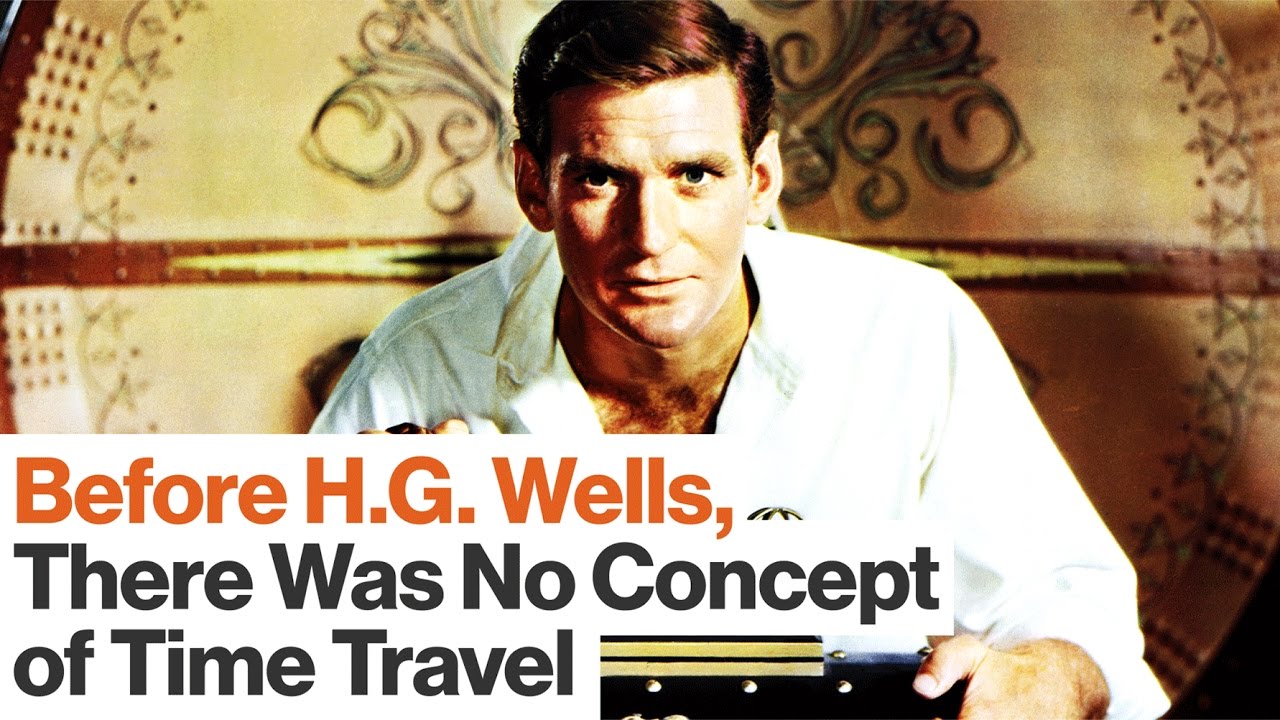
Time Travel in Science Fiction: A Brief History
Watch the newest video from Big Think: https://bigth.ink/NewVideo
Join Big Think Edge for exclusive videos: https://bigth.ink/Edge
———————————————————————————-
The idea of time travel, so familiar to us now, was unheard-of before H.G. Wells’s 1895 book The Time Machine. Since then, notions of time travel have blossomed in fascinating ways.The idea of progress — technological and moral — is inescapably familiar to us. For anyone born after the invention of the steam engine in the early 1700s, a steady series of mechanical and social changes (from the train and telegraph to the American and French revolutions) imbued each person with a sense of inexorable advancement. And it is these kinds of changes, James Gleick argues in his new book Time Travel: A History, that gave us the idea that we could literally travel to the future.
Humans have long prepared for the future (by storing grain for the winter, etc.), aware that we are gradually moving into it. The ability to make plans for different potential futures is partly what distinguishes us from other animals, but the idea of moving actively into a distant present — going forward a number of years in an instant — all begins with one book: H.G. Wells’s The Time Machine.
Published in 1895, it proved a work of such imagination as to inspire all subsequent time travel stories, says Gleick. Before The Time Machine, there is simply no record of us thinking we might travel into the future at a faster pace than what occurs naturally. Without evidence of technological and social progress, there was simply no reason to think that the future would be different from the present in any substantial way.
Read any book set in the future, or watch any sci-fi film that imagines the future. There are always imaginative technological changes to account for, as well as social differences. More frequently than not, they are imagined as dystopias: Brave New World, 1984, Bladerunner, AI, etc. But the original account of a society drastically different from its own — Thomas Moore’s Utopia, published in 1516 before the Enlightenment’s myriad advances — is not located in the future. It is located on a faraway island, so far that is is impossible to reach, at least presently.
It is fascinating that just ten years after Wells’s The Time Machine is published, Einstein publishes his theory of special relativity, beginning a paradigm shift that provides mathematical justification for the fanciful notion of time travel. Wells’s book had no influence on Einstein, but it speaks to the power of the imagination that fictional ideas, like that of a time machine, can presage fundamental changes in how we view reality.
James Gleick’s most recent book is Time Travel: A History.
———————————————————————————-
JAMES GLEICK :
James Gleick was born in New York City in 1954. He graduated from Harvard College in 1976 and helped found Metropolis, an alternative weekly newspaper in Minneapolis. Then he worked for ten years as an editor and reporter for The New York Times.
His first book, Chaos, was a National Book Award and Pulitzer Prize finalist and a national bestseller. He collaborated with the photographer Eliot Porter on Nature’s Chaos and with developers at Autodesk on Chaos: The Software. His next books include the best-selling biographies, Genius: The Life and Science of Richard Feynman and Isaac Newton, both shortlisted for the Pulitzer Prize, as well as Faster and What Just Happened. They have been translated into twenty-five languages.
In 1989-90 he was the McGraw Distinguished Lecturer at Princeton University. For some years he wrote the Fast Forward column in the New York Times Magazine.
With Uday Ivatury, he founded The Pipeline, a pioneering New York City-based Internet service in 1993, and was its chairman and chief executive officer until 1995. He was the first editor of the Best American Science Writing series. He is active on the boards of the Authors Guild and the Key West Literary Seminar.
———————————————————————————-
TRANSCRIPT :
James Gleick: If there was one startling fact that got me going on this book it was realizing that time travel is a new idea. We’re so familiar with it. We grow up with time travel. We have time travel in cartoons. We know all of the jokes. We know the paradoxes. It’s like part of the fabric of our culture. And it was really a surprise to me to discover that before H.G. Wells there was almost no conception of time travel. Nobody put the two words together. Time Machine, his 1895 book is really the first time people thought there could be such a thing as a time machine and that just struck me as weird.
Read the full transcript at https://bigthink.com/videos/james-gleick-on-hg-wells-and-sci-fi-time-travel-evolution


@simonbode7356
September 16, 2025 at 10:12 pm
In 1733 Samuel Madden wrote a novel about a guardian angel who travels back to the year 1728, with letters from 1997 and 1998. Entitled "Memoirs of the Twentieth Century".
@KuljitIssar
September 16, 2025 at 10:12 pm
is time travel to past future really possible and how i want to do it please help me for tis
@bclocke2303
September 16, 2025 at 10:12 pm
When they say H G Wella was the first one to introduced Time Travel and portals Never read the Celtic Tales and more.
I laugh at those who don't read. Or some who read a try to make us dumb.
@ryushogun9890
September 16, 2025 at 10:12 pm
Idk, there lots of different things in the 16th century.. renaissance was going on. New ships and possibilities, so we got to be specific of what exactly is different enough for time travel. Physics had lots going on, maybe not so much for medicine tho.. food preservation, which adds to understand how much you can manipulate things in the future. Plus people were very religious, so their fantasies were more set in religion, ancients and traveling in the real world.
@davehaggerty3405
September 16, 2025 at 10:12 pm
Before HG Wells plagiarism was not a big thing.
@shetrektoned
September 16, 2025 at 10:12 pm
Some ancient texts depict a character skipping forward in time. In Hindu historical texts, the Vishnu Purana mentions the story of King Raivata Kakudmi, who travels to heaven to meet the creator Brahma and is surprised to learn when he returns to Earth that many ages have passed. The Buddhist Pāli Canon mentions the relativity of time. The Payasi Sutta tells of one of the Buddha's chief disciples, Kumara Kassapa, who explains to the skeptic Payasi that time in the Heavens passes differently than on Earth.
@michaelrender1584
September 16, 2025 at 10:12 pm
Thought it was Jeremy Kyle on the thumb nail
@immaculateorganicsoaps3533
September 16, 2025 at 10:12 pm
In the Time Machine, he did travel to the past to stop his fiance's death. He realized he could not change the past which is why he went to the future.
@melancholiac
September 16, 2025 at 10:12 pm
A Connecticut Yankee in King Arthur's Court?
Mark Twain, 1889.
@exhaustguy
September 16, 2025 at 10:12 pm
HG Wells' works are paradigm setting such as War of the Worlds (first alien invasion). Another major contributions to the mad scientist paradigm with a unique wrinkle (The Island of Dr. Moreau). Also you see elements of an alien ecology intruding on Earth in Food of the Gods (think The Colour Out of Space and The Mist). The Invisible Man is something of a follower to Dr. J and Mr. H, but still has many unique elements. The First Men in the Moon was not the first describing a landing on the moon, but it was an early entry. These books came out in nine year period.
@yinYangMountain
September 16, 2025 at 10:12 pm
What! The entire story, ‘A Connecticut Yankee in King Arthur’s Court’ (Mark Twain), and written prior to H G Wells’ time travel idea, was about time travel.
@philippmuhle3410
September 16, 2025 at 10:12 pm
very boring man
@pedantic_quips
September 16, 2025 at 10:12 pm
Have to watch this for school. Gritting my teeth and thinking "ok boomer" every time I think of contradictions.
@dominichazell7862
September 16, 2025 at 10:12 pm
In the book, the Time Traveller was able to go back in time. He went back from the future he visited in 802701.
@hheythered
September 16, 2025 at 10:12 pm
Socialism is forward looking? Big think??? WHAT
@SorceressOfTheFake
September 16, 2025 at 10:12 pm
Your link for the transcript is not functional. Is there a way to fix this?
@QED_
September 16, 2025 at 10:12 pm
6:00 Socialism is forward looking (?) OMG . . .
@bisapien123
September 16, 2025 at 10:12 pm
8:24 look at this graph…
@harshbhandari9070
September 16, 2025 at 10:12 pm
3:07 to 8:09 ,
@varunkurup300
September 16, 2025 at 10:12 pm
Time travel is there in the story of balarama marrying his wife from tretayuga , while he is in dwaparayuga .
@madnessends2477
September 16, 2025 at 10:12 pm
Do people think "mansplaining" just means a man explaining anything better?
@Kit5une131313
September 16, 2025 at 10:12 pm
Interestingly, in Well's "The Time Machine", there is NO concept whatsoever about changing something, either in the past (the possibility of travelling into the past is only briefly mentioned in the novel but it IS mentioned) or in the future.
@TheTravelVlogger
September 16, 2025 at 10:12 pm
Awesome
Comments are closed.