
A Brief History of the Hawaiian Language
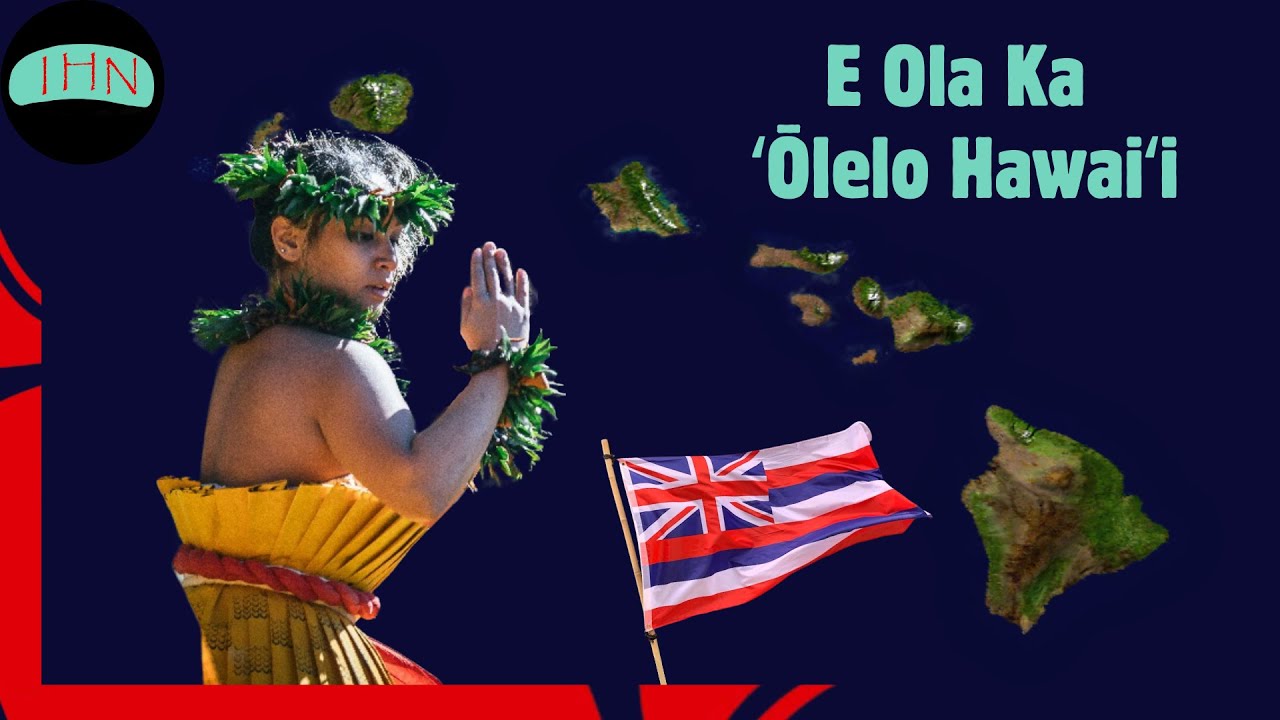
From the language of a kingdom, to near extinction, to one of the most remarkable revitalizations to date, come join us as we explore the fascinating history of ʻōlelo Hawaiʻi–the Hawaiian language.
Take your language skills to the next level!—click the link below and get 15% off Helm News with code IHNLANG
https://helm.news/?via=IHN
If you like our work and want to help the channel thrive, consider supporting us on Patreon!
https://www.patreon.com/indigenoushistorynow
Hawaiian newspaper archives
https://www.papakilodatabase.com/
https://nupepa.org/
Sources and suggested reading
The Voices of Eden: A History of Hawaiian Language Studies — Albert J Schütz
Hawaiian Language: Past, Present, Future — Albert J Schütz
Hawaiian Grammar — Samuel H Elbert and Mary Kawena Pukui
Interview clips — ahaioleloola https://youtu.be/ITMlt8dqKlc?si=0tnoZxDbMJX6sEeR
Timestamps
00:00 Intro
01:47 Sponsored by Helm News
03:30 Origins and classification
04:34 Dialects
05:37 The alphabet and literacy
07:13 Pidgin
08:00 Suppression and decline
10:34 Resurgence
14:49 Conclusion


@SephardicHawaiian
August 1, 2025 at 1:08 pm
Mahalo nui loa no keia wīkio, he piha haʻaheo no wau keia manawa. Thank you so much for this video, I am full of pride right now. My grandfather, who was born in 1906 and passed away in 1982, was manaleo, a native speaker of ʻŌlelo Hawaiʻi. His mother was three quarters Hawaiian and a quarter Chinese, and his father was half English and half Hawaiian. My great grandparents were both of aliʻi/chiefly blood, with my great grandmother serving as Queen Liliʻuokalaniʻs personal seamstress and one of her ladies in waiting. My great grandparents spoke only Hawaiian at home as well as at Court. My great grandmother was married twice. With my great grandfather her 7 children all spoke Hawaiian, when she remarried to her second husband, who was an immigrant from China, she was discouraged by her second husband, Mr. Wong, in teaching ʻŌlelo Hawaiʻi to her 5 children with him – my Wong aunties and uncles spoke English and our Punti dialect of Cantonese, but could only understand Hawaiian. In school, including his attendance at Kamehameha Schools, my grandfather was ridiculed, beaten and kept after school numerous times for being caught speaking ʻŌlelo Hawaiʻi on school grounds. My grandma was pure Portuguese, and while she diligently learned many Hawaiian cultural practices – she was renowned as the best lei maker, master quilter and her haupia ( a Hawaiian coconut milk pudding) is still talked about in our family over 20 yrs after her passing. Still, she refused to let my grandpa teach our language to my mom, their only child. My dad was also pure Portuguese and my parents also did not let my grandfather teach me Hawaiian. When I was a kid my grandpa used to take me fishing with him; we only caught enough fish or octopus to make it look like we went fishing, instead he would teach me basic Hawaiian, our family genealogy and some cultural practices. He made me swear never to tell my parents or my grandma; I only told them after my grandfather passed away. I studied ʻŌlelo Hawaiʻi for two semesters in 1978, my freshman year of college, at the University of Hawaiʻi under Professor Haunani Bernadino, who was one of the first kumu ʻōlelo at the UH. I moved to California and almost forgot what little Hawaiian I knew. I live in Sacramento, CA and we have a very large and active Native Hawaiian community. I was lucky that for a while we had kumu, Kauʻi Peralto, who came from the Bay Area to Sacramento to teach ʻŌlelo Hawaiʻi, and I took classes from her for several years. Today I can speak simple conversational Hawaiian and am able to read with probably 60 percent fluency the old Hawaiian newspapers online. Out of my two sisters and myself, I am the only one who can speak our language with any fluency, and one of the few cousins of my generation that can. The wonderful thing is one of my nieces, her husband and both of their daughters are all fluent in our language. My great grandmother was fined for speaking Hawaiian in public when we were a Republic and had to take in peopleʻs laundry to make money after the overthrow because she refused to learn English, learning just enough to speak to my grandma, who was her favorite daughter in law. My great grandmother died at the age of 56, my grandpa always said his mother died of a broken heart. I read with great sadness this month that the last fluent native speaker of the Caddo language of Oklahoma passed away, and I have friends here in Sacramento who are members of the Maidu, Nisenan, Wintu and Miwuk nations who are all struggling to keep their tribal languages alive. You cannot really understand our world view or our history that is passed down to us from our elders if you cannot understand our languages. Thank you, thank you for your channel and your efforts to tell the stories of our struggles to preserve our language. There is not one group of Indigenous Americans, and this includes Native Hawaiians, the Chamorro people of Guam, the Samoans of American Samoa or the Taino people of Puerto Rico who have not had to fight to preserve our languages, often in fragments, since our independence was taken from us. What you do helps so much. Mahalo! Jason – my ʻinoa Hawaiʻi is Keliʻinohokula.
@Dinnymay-q7d
August 1, 2025 at 1:08 pm
Polynesian renaissance
@reporebo
August 1, 2025 at 1:08 pm
Thank you for this video and all your content about this important history! I really appreciate it.
@sesesesesesesesesesese
August 1, 2025 at 1:08 pm
Finally, someone who actually tries to pronounce Hawaiian in a video about Hawaiʻi!
You’d be surprised how rare this is. Youtube is full of people who profess to know all about Hawaiʻi but they can’t even pronounce words as simple as “ke” or “ʻo”.
@EGSBiographies-om1wb
August 1, 2025 at 1:08 pm
16th
@meijiishin5650
August 1, 2025 at 1:08 pm
One thing I've noticed growing up is that it feels like way more slogans and advertisement is done with Hawaiian, and the average person seems to know more words from it. It didn't dawn on me until I realized I've basically never had any Hawaiian education and I could read a slogan one time lol. Take it with a grain of salt because it's just ancedotal, but it feels to me like the more people graduate from these schools, the more mainstream Hawaiian gets and it has an effect on everybody.
@znmnky13
August 1, 2025 at 1:08 pm
Aloha au i ku'u 'aina.
@matowicakte
August 1, 2025 at 1:08 pm
Simple and concise, a fine piece of appreciation for a people’s heart and knowledge here and im proud to have someone personally as dedicated as you learning from all my relations.
@knelnel
August 1, 2025 at 1:08 pm
7:05 13:47 Isn’t Hawaiian related to the languages indigenous to the Pacific? Why mentioned it as an indigenous American language when it’s not related to any languages found on the American continent?
@AncientAmericas
August 1, 2025 at 1:08 pm
Awesome to see that Hawaiian is thriving!
@electricVGC
August 1, 2025 at 1:08 pm
Thanks for this great video. I hope that you have the opportunity to work with some of these Hawai'ian organisations in the coming videos.
As somebody who is not very familiar, I think if I had heard you can only receive a complete education in one indigenous American language, I would have guessed Guarani before Hawai'ian. I hope Guarani or Quechua are among the first languages you touch on in this series.
@elles734
August 1, 2025 at 1:08 pm
This channel is so good! Looking forwards to the rest of languages series. The history of Hawaiian really just goes to show that it's not somehow 'inevitable' that indigenous languages will die out because of contact or modernisation. It's targeted suppression and violence against languages and their speakers that is almost always the cause. Aroha from Aotearoa.
@frostythesasquatch
August 1, 2025 at 1:08 pm
Thank you for making this! I can only imagine that the two biggest reasons for this resurgence is 1) vast amounts of written material in the language, and 2) the culture is on an island.
Comments are closed.