
Removed Rant: Jazz Vs. Classical
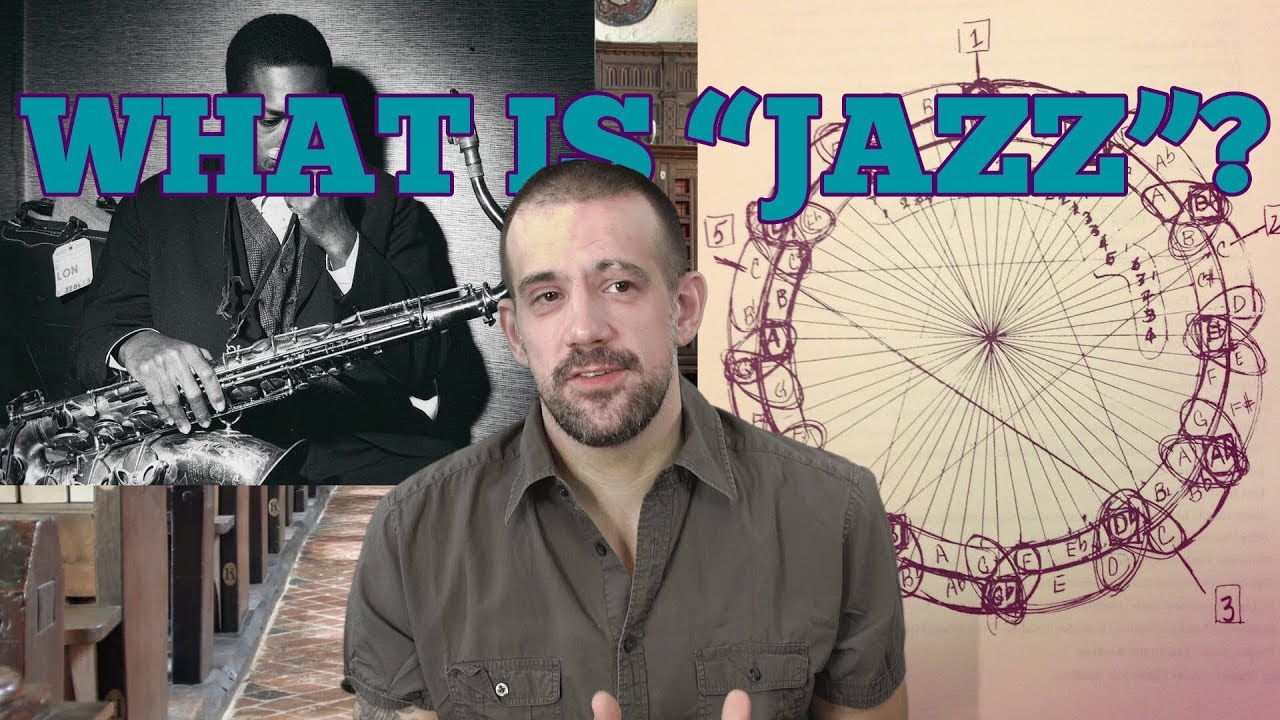
This was meant to be part of an educational series about generative harmony, but I obviously went way off topic. But an interesting “conspiracy” of mine nonetheless. =)
This was meant to be part of an educational series about generative harmony, but I obviously went way off topic. But an interesting “conspiracy” of mine nonetheless. =)


@remixisthis
February 23, 2026 at 10:31 pm
👏 👏
@vieiradesu
February 23, 2026 at 10:31 pm
i agree that jazz is some sorta of an evolution from classical music, but the classical music of our era is metal
its way younger than jazz, and its still developing, even though its in all time low right now, its still improving
take necrophagist for example, very well known and respected band, take away the vocals, the distortions, change the drums for other percussive instruments, its pure classical music theory
@chemathmusician
February 23, 2026 at 10:31 pm
1. I am a classically trained pianist, cellist, and composer in training
2. I can improvise (but only a couple times in semi-public)
3. 7th chords other than dominant and II 7th do exist, but mostly as modulations (even Bach)
4. altered 5th chords also exist, by this one can have a doubly altered dominant ninth, which contains an entire whole tone scale
edit 5. that 6th chord everyone says to be different from classical, is considered to be stable in russian classical as the combination of a major chord and its relative minor
@histatimaniples
February 23, 2026 at 10:31 pm
Jazz is classically trained musicians playing with out rules
@아희힝-l5c1z
February 23, 2026 at 10:31 pm
Lol have you ever heard 21st modernism classical music? Such as Prokofiev, Stravinsky, Messiaen, Boulez, etc?
@faithiscrazy
February 23, 2026 at 10:31 pm
Mote zart
@LuckyPoop
February 23, 2026 at 10:31 pm
Jazz sucks
@handledav
February 23, 2026 at 10:31 pm
art
@Patrick-gm3fb
February 23, 2026 at 10:31 pm
Bravo.
@theyabib3323
February 23, 2026 at 10:31 pm
Thaths so ridiculous they devoloped alongside on another and took influences from each other at the time, one didn't develop into the other. A lot of jazz harmony also never made it properly into classical music, like jazz´s use of blues harmony. Though stravinsky did also use the minor and major third he didn't do it in the same way and didn't emphasise it nearly as much. Also there is the difference of perfomance, as jazz is (next to always) improvised, depending on who you ask it always has to be improvised. I could go on and on, what you said though is simply not true, they are different.
@saraafonso4646
February 23, 2026 at 10:31 pm
Hello 🙂 You shall be mentioned on my paper for university! Just letting you know 🙂 I think there's more to it than just racism, there's Adorno's "On Jazz" which i think played a huge role in Classical Music Academia. It's hard to find information on this. Why the divide? It seems so arbitrary. Anyways, great video!
@peliculasymusica-i7t
February 23, 2026 at 10:31 pm
I feel like calling jazz "21st century classical music" is insulting to jazz and to the contributions Americans (especially African Americans) have made to music. It has so much of its own sound, textures and rhythms. It has improvisation. It's our country's combination of African roots and European roots. I like classical. But I LOVE jazz for what makes it distinct.
@jazzman2516
February 23, 2026 at 10:31 pm
Jazz is music for the love of music. It may concern form, it may not. It may just use a few elements of music but it is also able to explore all elements in their entirety (I.e., using non-restricted harmony and all known rhythms). Jazz is more than just a genre, it is the culmination of mankind’s knowledge of music. I find it ridiculous that most people still define it based on the decades of its genesis. It is SO MUCH MORE!
@sifagayev7793
February 23, 2026 at 10:31 pm
What an awful take.
@abrahampalmer8761
February 23, 2026 at 10:31 pm
I love both genres but tbh I prefer jazz music any day my favorite jazz artist of all time is John Coltrane
@Nuke_Skywalker
February 23, 2026 at 10:31 pm
Adorno wants to know your location.
@ericbuzard349
February 23, 2026 at 10:31 pm
Benn Jordan.
You are within the small, small, minority of people who place a greater value on :
The people who make the music.
What era it was composed in.
Who it was composed by.
The historical roots from which the genre originated.
Compared to the vast, vast, majority of people who just want to :
Listen to some music.
Only really care about the songs they like.
Just need a way to classify similar songs/music.
The problem for you, is that the vast, vast, majority of people don't actually need that information, and likely don't care.
You want to pretend that Miles Davis, Coltrane, and Louis Armstrong sound like Bach, Beethoven, and Mozart because you feel like the word "Jazz" has negative connotations towards black people.
You think that because of the past racial discrimination that black jazz composers, and players faced during the Jazz heyday, that we should call "Jazz" music "Modern Classical" to avoid them.
Unfortunately for you, and others in the small, small, minority of people who care about the above mentioned points, the categorization of music into the genres of "Jazz", and "Classical" is an objectively useful metric for finding similar musical pieces, and composers.
Now ask yourself if this would accomplish anything useful?
Does getting rid of the term "Jazz", and insisting "modern classical" take hold make the classification of music more easy?
No.
We already have "Jazz", and "classical" to differentiate two separate genres of music that are distinctly different.
Does saying "Modern classical", instead of "Jazz" offset, alleviate, or ease in any ways; the unjust suffering of great black Jazz musicians and composers of the past?
Again the answer is no, as this is not possible.
It accomplishes nothing new, and solves nothing old.
So why should anyone entertain this silly idea?
Please explain.
@legosteveb
February 23, 2026 at 10:31 pm
Lyle Mays (and Pat) blurred this line with their “The Way Up” album. BTW the live version the the insane trumpet improve is worth hearing.
@jamesbannon1057
February 23, 2026 at 10:31 pm
Not a big fan of Beethoven, or Mozart for that matter. For some reason, I just don't feel emotionally engaged with them. I prefer Bach or Bartok to either. You're right about Jazz. Two big reasons why it took so long to be accepted: a) the majority of the instrumentalists played by ear (at least initially); and, b) they were black.
@oliverlovekin
February 23, 2026 at 10:31 pm
I think you meant to say Debussy and **Ravel @0:10
@SacredAmbulance
February 23, 2026 at 10:31 pm
Errr no, play any song from the classical period and a jazz song and anyone will tell you they are different. Classification of music genre has a purpose
@35milesoflead
February 23, 2026 at 10:31 pm
I think comparing Jazz directly with "classical" (which isn't just pre-1900) is a fools errand because Blues had such an influence on the Jazz movement and structure.
But this brings me to the whole "modern classical" idea or oxymoron. The "classical style" covers things that have this vaguely orchestral sound but are written in context of functional harmony. Yet if it's written between 1901 and 2020, it fails to be "classical music" because it wasn't written during one of the classical era.
It's like a conversation I had with someone a decade ago who claimed they were making "90's Jungle" in 2010. They didn't like the fact that they were told they weren't making 90's jungle but something that either has it's roots in Jungle or is inspired by 90's jungle. But jungle had already evolved at that point to various different genres via drum and bass, 2-step etc.
@Poparad
February 23, 2026 at 10:31 pm
As someone who actively plays in both orchestras and jazz bands and holds dual degrees in "classical composition" and "jazz," I 100% agree with your idea.
Here's an additional argument for jazz being a continuation of classical, as opposed what is generally referred to as 20th century classical (Shoenberg, Hindemith, Babbit, etc): In pre-1900s "classical" music, all of the major composers had reputations as performers just as much, if not more, than as composers. Bach was mostly known as an organist in his time. Mozart's virtuosity on multiple instruments is well documented and he performed the premiers of most his own piano works. Debussy was a virtuosic pianist. In addition to that, they were all also, and this important, improvisers! There's the legend about Bach improvising a 5-voice fugue on a subject a potential patron supplied for him. Liszt, Chopin, and Paganini all regularly incorporated improvisation into their pieces and some of their pieces are actually just transcribed improvisations.
The 20th century saw the divorce of performer and composer with composers mostly existing in academia and recruiting other people to perform their pieces. Likewise, performers became specialists in performance with no expertise in either composing or improvising (outside of "chance" or "aleatoric" improvising called for in scores, but definitely not harmonic/melodic improvising like you'd find in jazz or any tonal style of music). Throughout the 20th and into the 21st centuries, jazz musicians have instead carried the torch of the performer/composer. Ellington was also at the piano in his band playing his compositions. Chick Corea and Keith Jarrett both have straddled the division between jazz and classical. Brad Mehldau especially (who makes his affinity for Brahms no secret) has composed a large number of "serious" compositions for solo piano, piano and voice, up to full orchestra, always performing the piano parts himself. Composer/performers like Wayne Shorter and Allan Holdsworth have pushed the envelope of tonal music beyond the breaking point without completely abandoning tonal harmony at the same time like the 2nd Viennese School did (Schoenberg, Berg, and Webern).
@anrque
February 23, 2026 at 10:31 pm
And don't even get him started on "avant-garde…"
Great rant, Benn. Keep them coming!
@UnchartedThoughtsMusic
February 23, 2026 at 10:31 pm
Dissonance is like seasoning, too little makes it bland, but too much and you ruined the whole dish
@user-ih6vs3eg3o
February 23, 2026 at 10:31 pm
If jazz is the devils music then I’m dancing in the burning pit of hell!
@jackk9366
February 23, 2026 at 10:31 pm
I wish I new how to do the clap emoji on desktop, but this man is spitting facts. I think the innovations made by jazz this past century are (to me and most western musicians) way more important then what happened in what was called classical. But by far my favorite was improvisation and the emphasis on the performer's vision.
Comments are closed.